
Introduction
Working width determines which roll sizes an industrial bubble wrap machine can produce, how many rolls can run across the web and how much material may be lost at the edges. It should not be selected from the largest number in a specification sheet alone. Because ZTECH specializes in bubble film extrusion together with winding, slitting and bag-making equipment, width planning is treated as a complete production-route decision: start with the sellable product, calculate the usable web, then confirm that every downstream stage can handle it. This guide explains how to make that calculation without oversizing the line.
Quick Answer
Start with every finished-roll width you expect to sell and decide whether each order will be wound directly, produced several rolls across the web or made as a wider mother roll for later slitting. Add the process allowance required for edge treatment and cutting, then check the die, forming roller, traction section, slitter, winder and downstream converting equipment against the same usable width. The correct machine width is the one that supports your regular roll layouts and converting route efficiently, not simply the widest line available.
Start with the Finished Bubble Film Width
List the Finished-Roll Sizes
Before comparing machines, list your common roll widths, the widest regular order, approximate demand by size and planned additions. This prevents one occasional extra-wide request from controlling the equipment decision. A line that efficiently covers recurring orders may be more useful than a wider machine that is rarely filled.
Separate Finished Rolls from Mother Rolls
A finished roll leaves the line at its saleable width; a mother roll is produced wider and divided later. Two 1000 mm rolls may be wound side by side, produced in separate runs or cut from one mother roll. Each route requires a different width and winding plan.
Include Downstream Product Widths
When film will become bags, mailers, sheets, perforated rolls or laminated cushioning, work backward from the converter. Folded dimensions, seal position, lane count and input-width limits may require a different web width from the apparent finished size.
Distinguish Machine Width from Effective Working Width
What the Width Figures Mean
Three width terms should be kept separate:
- Machine or maximum width: the overall film width the production section is designed to form.
- Effective working width: the usable width available after edge treatment for slitting or winding.
- Finished-roll width: the final width of one saleable roll.
Effective working width is normally the key figure for order-layout calculations. Treating maximum width as finished width can create a shortfall after trimming.
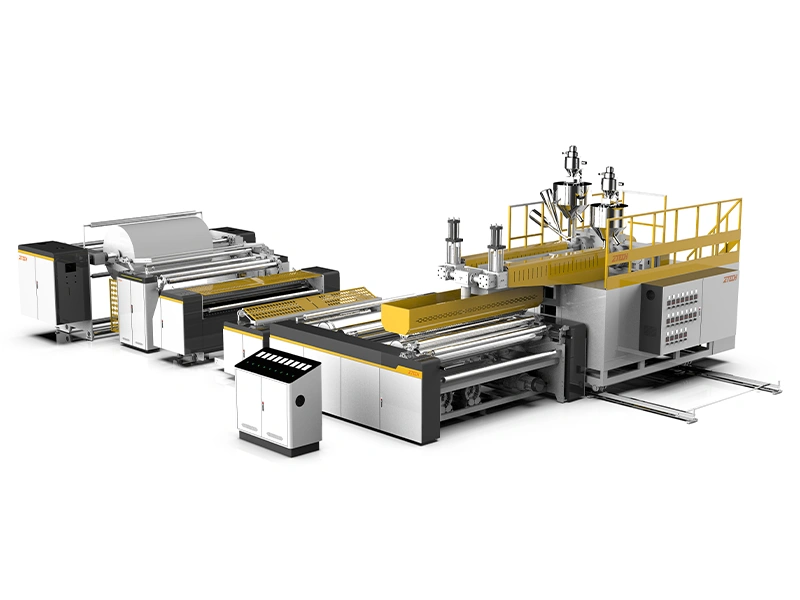
ZTECH’s ZT150-2T illustrates the difference between maximum and effective working width: the machine is rated at 1540 mm maximum width and provides 1500 mm after trimming. The ZT200-3T is similarly rated at 2040 mm maximum and 2000 mm effective width. Specifications vary across ZTECH’s air bubble film machine range, so buyers should confirm both figures for the exact configuration being quoted rather than applying the same trimming allowance to every model.
Why Edge Treatment Reduces Usable Width
Edge treatment removes material that should not enter the saleable roll or downstream process. The allowance depends on line design, film structure and operating conditions, so ask where the width is measured and whether it is quoted before or after trimming.
Calculate the Required Working Width
Calculate One Finished Roll
For one directly wound product, use this relationship:
Required effective width = Finished-roll width + Necessary process allowance
The process allowance should be confirmed for the proposed film structure and line configuration. Do not add an arbitrary percentage when the supplier can provide a tested effective-width figure.
Calculate Several Rolls Across the Web
For side-by-side production, use:
Required effective width = Total finished-roll width + Cutting or layout allowance
| Planned roll layout | Total finished width |
|---|---|
| 2 × 750 mm | 1500 mm |
| 2 × 1000 mm | 2000 mm |
| 600 + 600 + 800 mm | 2000 mm |
| 1 × 2500 mm | 2500 mm |
These examples explain the calculation, not a guaranteed configuration. Layouts with the same total width may still require different knives, core positions, tension control and winding arrangements.
Compare the Main Order Combinations
Compare the main order combinations under each candidate width. Check which regular rolls can run together, whether any remaining strip is saleable, how often knives and cores must change, and whether the widest order needs a separate route. This reveals whether extra width adds usable capacity or only unused web area.
Match the Complete Width Path
Check the Die and Forming Roller
The die must deliver the required web, and the forming roller must create the bubble pattern across it. Review extrusion, forming, cooling, traction, edge treatment, slitting and winding as one path; the narrowest relevant section sets the practical limit.
Check Traction, Slitting and Winding
Traction must guide the web, slitting must support the planned cuts, and the winder must accept the required cores, roll positions and diameters. ZTECH's bubble film slitters divide bubble film and EPE foam into different widths, while its coreless rewinders have separate material-width limits. A wider extrusion line therefore does not automatically create a compatible downstream system.
Match Width to the Winding Strategy
Direct Finished-Roll Winding
Direct winding suits stable product ranges and removes an offline step, but the production winder must support every planned roll position and core. Record width, roll length, target diameter, core length and simultaneous roll count.
Mother-Roll Production
Mother rolls provide flexibility when many widths are sold, but add handling and a separate converting step. Confirm the slitter's input width, unwind diameter, cutting layout and rewind arrangement, along with storage and handling for the larger roll.
Check Slitting and Downstream Converting
Decide Where Slitting Takes Place
State whether slitting occurs online, after mother-roll winding or during later converting. Online slitting requires the production winder to collect several widths correctly; offline slitting requires the slitter to accept the full mother roll.
Match Bag, Mailer and Sheet Production
For bags and mailers, calculate feed width from the full folded and sealed format, not only the front face. The same applies to sheet cutting and perforated rolls: a converter with a 1600 mm input limit cannot directly use a 2000 mm mother roll.
Match Lamination Materials
For laminated products, confirm the usable width of PE film, EPE foam, paper, foil and every secondary unwind. The laminate can only be as wide as the narrowest material or handling section.
Compare Wider Lines with Width Utilization
Calculate Width Utilization
Use a simple layout indicator:
Width utilization = Total sellable product width ÷ Effective working width × 100%
If a 2000 mm effective web produces 1600 mm of saleable rolls, the width utilization is 80 percent. This does not measure total line efficiency, but it helps compare order layouts and identify avoidable unused strips.
Do Not Assume Wider Is Better
A wider industrial bubble wrap machine is only worthwhile when the extra width matches a real product requirement. For example, ZTECH developed a custom 4200 mm line for producing extra-wide bubble film used as swimming pool covers. In this type of application, the wide web, winding system and downstream handling are planned together, so the additional width can be used effectively rather than becoming unnecessary capacity.
Verify the Width During Production Testing
Run the actual product layout during acceptance testing. Measure usable width after edge treatment, each slit roll and the final wound width. For multi-roll production, confirm roll count, knife positions, core alignment and stable winding using the intended material structure.
Prepare Width Requirements for the RFQ
A width-focused RFQ should include the following information:
| Requirement | Information to provide |
|---|---|
| Finished-roll widths | Every regular and maximum product width |
| Main order mix | Approximate share of each width |
| Roll layout | Single roll or planned side-by-side combinations |
| Production route | Direct finished rolls or mother rolls |
| Slitting method | Online or offline |
| Roll specification | Core, length and diameter requirements |
| Downstream equipment | Slitter, rewinder, bag, mailer or sheet machine input width |
| Laminating materials | Width of PE film, EPE foam, paper or foil |
Ask the quotation to list maximum machine width, effective width after trimming, supported roll layouts, mother-roll width and downstream input width separately. This allows the extrusion line, winding arrangement and auxiliary equipment to be evaluated as one system.
Conclusion
Choose working width from the product backward. List the finished widths and order mix, calculate the single-roll or multi-roll layout, add the confirmed process allowance and verify the complete path from forming through winding. Then check that slitting, bag making, mailer production, sheet cutting or lamination can accept the same mother roll. The right industrial bubble wrap machine width is the one that covers regular products with efficient layouts and compatible downstream processing, not the largest width shown in a catalogue.
FAQ
Can a wide bubble film line run a much narrower product?
Often, but confirm stable web handling, unused-width waste and whether several narrow rolls can run together.
How much spare width should be reserved for future products?
Reserve width only for credible future sizes. Compare expected volume with added machine, tooling and downstream requirements.
Does changing bubble size change the required working width?
Not directly, but a different forming roller may change the validated setup. Confirm that the selected bubble pattern is available across the required effective width.
Can automatic winding determine how many rolls run together?
Yes. The winder must support the roll count, cores, spacing, tension and unloading method, not only the knife positions.
Should width acceptance be based on one measurement?
No. Measure after trimming, after slitting and on the finished roll during a stable production run.