
A 5-layer and a 7-layer bubble film machine are not two quality grades of the same product. They are two routes for producing different laminated bubble-film constructions. The practical question is not which number is higher; it is whether the target roll needs a defined five-layer composite or a more complex, defined seven-layer construction.
For ZTECH, that discussion starts with the finished product: its material combination, the position of each facing material, the need for in-line lamination, and the conversion step after winding. This keeps the machine decision connected to the roll, bag, liner, or mailer the factory intends to make.
What a 5-Layer Lamination Route Can Make
A 5-layer route is suited to bubble-film products that combine a bubble-film structure with one specified PE-coated facing material in the same production route. ZTECH’s 5-layer lamination equipment can produce 2-layer or 3-layer bubble film, or laminate bubble film in line with PE-coated aluminum foil, kraft paper, EPE foam, or PE film to form a total five-layer product.
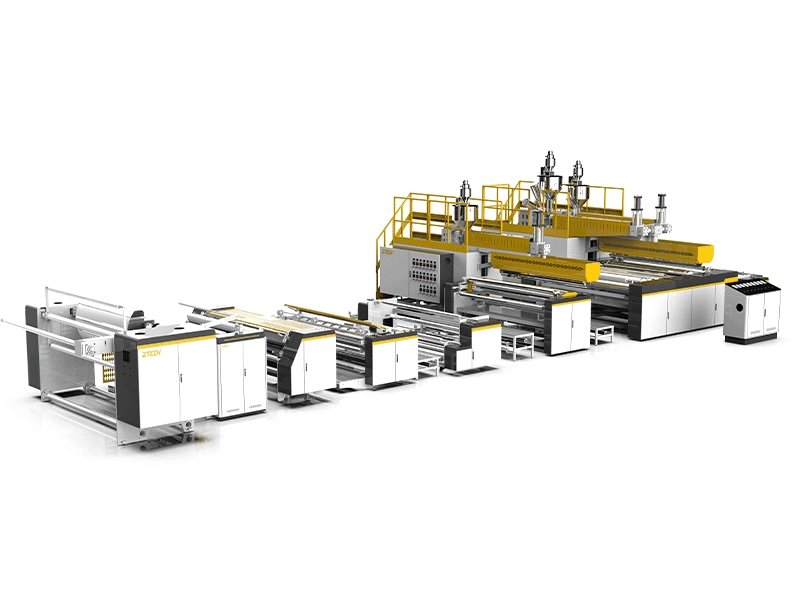
ZTECH 5-layer air bubble film lamination extruder for bubble-film composite products.
The choice of facing material begins with the intended finished product, not with a generic claim about one material being superior to another.
Kraft-paper-facing bubble film
Kraft paper enters the design when the product is meant to leave the line as a paper-faced packaging material. This route suits paper-and-bubble rolls and kraft-paper bubble mailer material, where the paper web is part of the finished exterior rather than a separate converting material added later. The line therefore needs to bring the paper-facing web and bubble-film section together as one composite roll.
Aluminum-foil-facing bubble film
Aluminum foil is selected for foil-faced bubble-film composite rolls. Here, the foil-facing web is one of the materials that the line laminates with the bubble-film section, creating a foil-and-bubble product rather than a standard bubble-film roll. The target is the finished foil-faced format, so foil is part of the route selection from the start.
EPE-foam and bubble-film composites
EPE foam is used when the product range includes foam-and-bubble composite material. It turns the output into a combined EPE-foam and bubble-film web, which may be supplied as roll stock or taken forward as a protective-material format. The lamination route has to accommodate both the foam web and the bubble-film section as the finished composite is made.
PE-film-facing products
A PE-film facing is relevant when the target laminate calls for a PE film surface in addition to the bubble-film section. This creates a PE-film-and-bubble construction in which the film-facing web is included during lamination. It is a route for a specified composite product, not a generic upgrade to any bubble-film roll.
Across these applications, the key advantage of the 5-layer route is its clear fit with a defined bubble-film-plus-facing-material product. In-line lamination keeps bubble forming and the specified composite step in one production route. The finished roll can then be prepared for its intended next stage, whether that is shipment as roll stock or downstream converting.
When a 7-Layer Route Becomes Relevant
A 7-layer route becomes relevant when the finished product needs a seven-layer laminate rather than the bubble-film-plus-one-facing-material format of a five-layer product. ZTECH’s 7-layer lamination equipment can produce 2-layer, 3-layer, or 5-layer bubble film, and can also form a total seven-layer product through in-line lamination with PE-coated materials such as aluminum foil, kraft paper, EPE foam, and PE film.
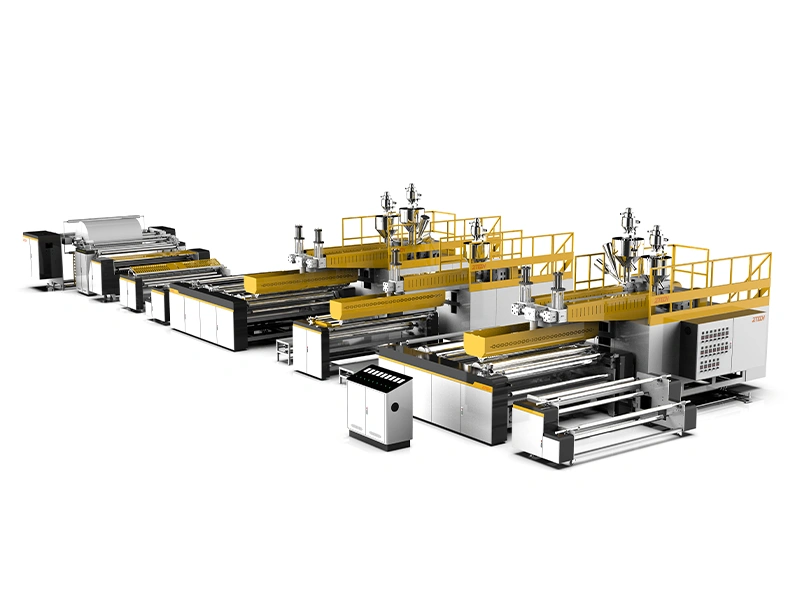
ZTECH 7-layer air bubble film lamination extruder for seven-layer bubble-film laminate routes.
The additional layers give the product designer room to combine more of the required webs in one finished laminate. The choice is driven by the target product—such as a more involved foil-facing, paper-facing, or foam-containing composite—not by a claim that seven layers are inherently better.
A 7-layer route does not imply an additional bubble layer. Its actual sequence depends on the target composite product, including which materials are used as faces and which sit within the laminate. This point needs to be settled once in the product design; it should not become a reason to treat the 7-layer route as a universal substitute for the 5-layer route.
How Finished Product Requirements Change the Route
The same five- or seven-layer label can lead to different line discussions when the finished product requirements change. The following inputs turn a product concept into a usable equipment route.
Effective width and bubble specification
Finished width determines the usable web width required after trimming and also affects the format of the roll or converted item. Bubble specification matters because the target bubble pattern is part of the finished film surface. Together, these two requirements shape the film format that must reach winding and the dimensions that downstream equipment must handle.
GSM, resin, and facing-material combination
GSM and resin describe the bubble-film portion of the finished structure, while the facing material defines the composite portion. They need to be considered together. A kraft-paper-facing product, a foil-facing product, an EPE-foam composite, and a PE-film composite are not interchangeable just because they may each be described as five- or seven-layer products. Their web materials, material order, and intended product format change the production discussion.
Finished rolls and downstream converting
The required end format also changes the route. A producer supplying finished rolls will focus on winding format and the roll specification needed by its customer. A producer planning coreless rolls, slit rolls, bags, or bubble mailers needs the laminated roll to feed the next operation in the intended form.
For example, a product planned for coreless rewinding needs the laminated web delivered in the roll format required by that operation. A product planned for slitting needs a roll format that can be converted into the required narrower widths. If the finished product will become a bubble bag or mailer, the laminate route should be considered alongside the relevant bag-making machine or bubble-mailer machine. These are product-path differences, not afterthoughts added once the extrusion and lamination machine has been chosen.
Beyond 7 Layers: When Two Lamination Processes Are Needed
Products specified as 9-layer, 10-layer, or 12-layer constructions require two lamination processes. In other words, the required finished structure is built through two composite stages rather than treated as a simple extension of a single 5-layer or 7-layer route.
That distinction helps prevent an unsuitable comparison. A team developing a 9-, 10-, or 12-layer product should plan the material sequence and the two lamination stages as part of the production route from the outset, including how the intermediate web will move to the next composite process and to final winding or converting.
Relevant ZTECH Equipment Routes
For a finished product built around a five-layer bubble-film laminate, see the 5 Layers Air Bubble Film Making Lamination Extruder. It is the relevant starting route for 2-layer or 3-layer bubble film and for total five-layer in-line laminates using the specified PE-coated facing materials.
For a seven-layer construction, see the 7 Layers Air Bubble Film Making Lamination Extruder. It is the relevant route when the product requires a total seven-layer laminate and the material combination is established.
The broader Air Bubble Film Machinery range can be used to connect the bubble-film line with the relevant winding or converting route. ZTECH approaches this as one production path: bubble-film structure, extrusion and forming, in-line lamination where required, winding, and the downstream operation that produces the final saleable format.
Conclusion
Choose a 5-layer route for a bubble-film laminate with the required facing material and a total five-layer construction. Move to a 7-layer route when the product calls for a seven-layer laminate with a more involved material combination. For 9-, 10-, or 12-layer products, plan for two lamination processes.
Send ZTECH your target cross-section and production requirements, including the materials, effective width, bubble specification, GSM, desired roll format, and planned downstream conversion. That gives the configuration discussion a concrete production target from the start.
Frequently Asked Questions
Is a 7-layer bubble film machine automatically better than a 5-layer machine?
No. The routes serve different finished-product constructions. A 7-layer route is relevant when the product requires a seven-layer laminate; it is not a general upgrade for every bubble-film product.
Can a 5-layer route laminate aluminum foil, kraft paper, or EPE foam?
Yes. The 5-layer route supports in-line lamination with PE-coated aluminum foil, kraft paper, EPE foam, and PE film to form a total five-layer product.
How are 9-, 10-, and 12-layer bubble-film products made?
They require two lamination processes. The material sequence and each composite stage should be planned around the required finished construction.
What else should be considered when the product will become bags or bubble mailers?
Consider the required finished roll format and the intended converting route alongside the laminate itself. Winding, slitting, bag making, and bubble-mailer production all affect how the laminated web needs to be delivered to the next operation.