
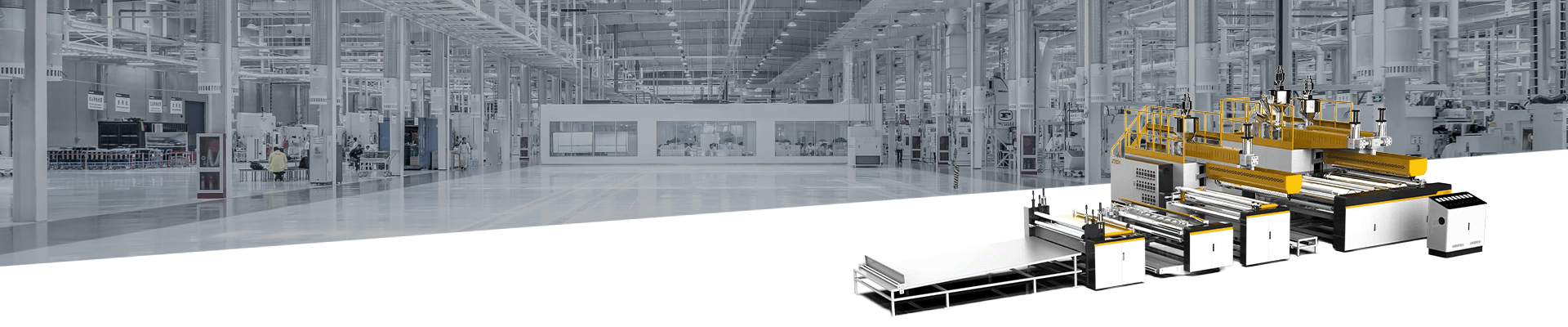
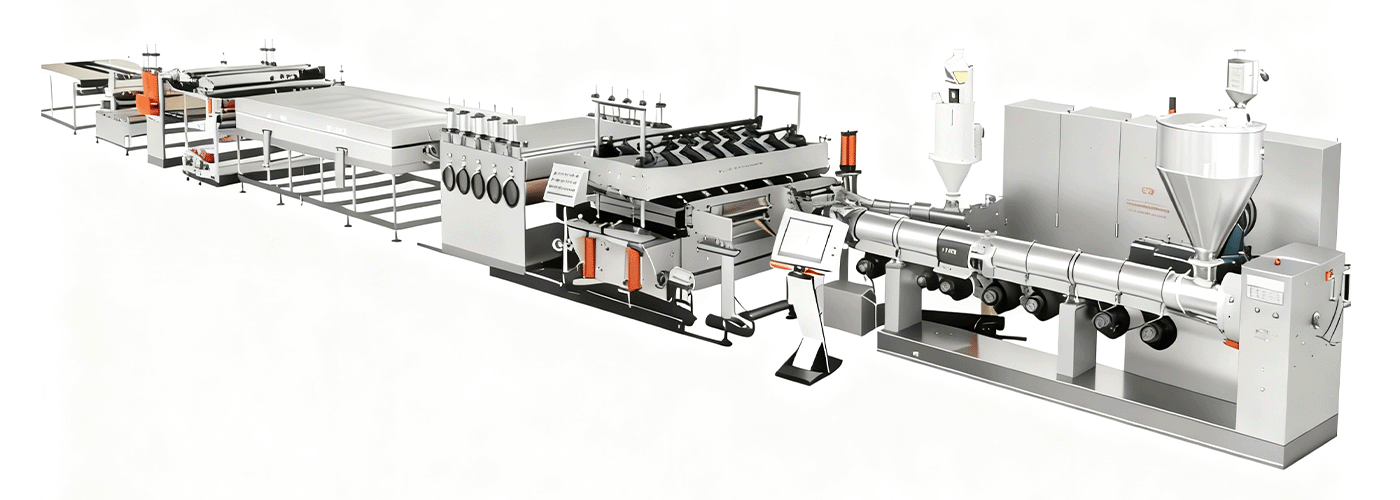
For a manufacturer planning to produce PP boards for packaging and handling, the first question is not which material is universally better. It is which finished component the line must make. PP honeycomb sheet and PP hollow board are both PP board products, but they are built and formed in different ways.
PP honeycomb sheet is a sandwich panel: face layers and bonding layers are combined with a hexagonal honeycomb core. PP hollow board is a continuous hollow-grid profile: its internal cells or parallel ribs are formed as part of the sheet itself. This difference determines the relevant extrusion route, the downstream converting process, and the kind of packaging component the board is intended to become.
This comparison is written for board and packaging manufacturers deciding which PP board production route fits a planned product. It explains the structural difference first, then shows how a flat panel requirement and a converted packaging-part requirement lead to different line discussions. For an overview of the two equipment directions, see ZTECH’s PP Sheet Board Machinery range.
The Structural Difference: Sandwich Panel vs. Hollow-Grid Board
The two products should be compared by their cross-section, not by a broad application label.
PP Honeycomb Sheet Is a Face-and-Core Panel
PP honeycomb sheet is built as a layered panel. The finished board combines surface layers, bonding layers, and a hexagonal honeycomb core. The production route reflects that structure: multi-layer co-extrusion prepares the layers, the core is formed into a hexagonal pattern, and the core is combined with the face layers before straightening and cutting.
This is a panel-first construction. The starting point is a broad, flat component with two faces and a defined core between them. Pallet top boards, container liners, and turnover-packaging components are typical directions when a project requires this type of face-and-core construction.
PP Hollow Board Is a Ribbed or Cellular Board Profile
PP hollow board is formed as a continuous profile rather than as a face-and-core composite. Molten PP is shaped through a die into a sheet with hollow cells, grids, or parallel ribs. The internal structure is part of the board profile, not a separate core combined with face layers.
This is a sheet-first construction. The board is often converted into a finished packaging part through cutting, folding, or fabrication. Boxes, crates, dividers, trays, and display components are typical directions when the project begins with a hollow-grid sheet and ends with walls, partitions, folds, or compartments. For a closer introduction to this board type and its downstream conversion, see ZTECH’s PP Hollow Board Production Line guide.
| Comparison point | PP honeycomb sheet | PP hollow board |
|---|---|---|
| Basic construction | Face layers and bonding layers around a hexagonal honeycomb core | A continuous board profile with hollow cells, grids, or ribs |
| Forming route | Multi-layer co-extrusion, honeycomb forming, and composite processing | Extrusion into a hollow profile, shaping, cooling, haul-off, and cutting |
| Product concept | A flat sandwich-panel component | A hollow-grid sheet for conversion into a packaging component |
| Typical component directions | Pallet tops, container liners, and turnover-packaging components | Boxes, crates, dividers, trays, and display components |
Which Finished Component Are You Planning to Manufacture?
The structural choice becomes clearer when the finished component is defined before the equipment discussion.
Start With Honeycomb Sheet for a Defined Flat Panel
Begin with the honeycomb-sheet route when the finished item is a flat panel specified with two faces and a honeycomb core between them. The relevant engineering question is how the face-and-core panel must be built: the face-layer arrangement, the core construction, the panel dimensions, and the finished format.
This route is appropriate when the board remains primarily a panel in the final packaging or handling system. A pallet top or container liner may have additional finishing steps, but the central product is still a flat sandwich construction. The line discussion therefore starts from layer formation, honeycomb-core forming, and composite processing.
Start With Hollow Board for a Converted Packaging Part
Begin with the hollow-board route when the board is the starting sheet for a converted packaging part. A box, crate, divider, tray, or display component is created from a hollow-grid board through a defined cutting, folding, or fabrication sequence.
For this route, the component layout matters as much as the board itself. A divider project should establish the required partition layout, the direction of the internal ribs, and the operations that create the final piece. A box or tray project should likewise be considered as a converted component with walls and folds, not simply as an unspecified “heavy-duty board.” The line discussion then starts from hollow-profile forming and the downstream process required for the finished part.
Do Not Select by Application Name Alone
Terms such as “returnable packaging,” “industrial protection board,” and “pallet component” do not identify the board structure. One project may require a broad sandwich panel, while another may require a hollow-grid sheet that will be converted into partitions or containers.
Use the finished component to make the first decision:
- Select the honeycomb route for a specified face-and-core panel.
- Select the hollow-board route for a specified ribbed or cellular sheet profile that will be converted into a packaging part.
- Define the cross-section and conversion sequence before selecting a route when the project is described only by its end use.
Why the Production Route Changes
The board structure is also a manufacturing decision. A honeycomb-sheet line must create and combine multiple elements: face layers, bonding layers, and a formed honeycomb core. Its production route includes multi-layer co-extrusion, honeycomb forming, composite processing, straightening, and cutting.
A hollow-board line forms the hollow grid directly in the board profile. The process centers on extrusion, a forming die, vacuum shaping, cooling, haul-off, straightening, and fixed-length cutting. The die establishes the internal hollow structure; the downstream sections stabilize, move, and cut the continuous board into the required format.
For this reason, a manufacturer should not begin with a general request for a “PP board machine.” A finished sandwich panel and a finished hollow-grid board require different forming principles. Establishing the structure first makes the later line-configuration discussion specific to the product that will actually be manufactured.
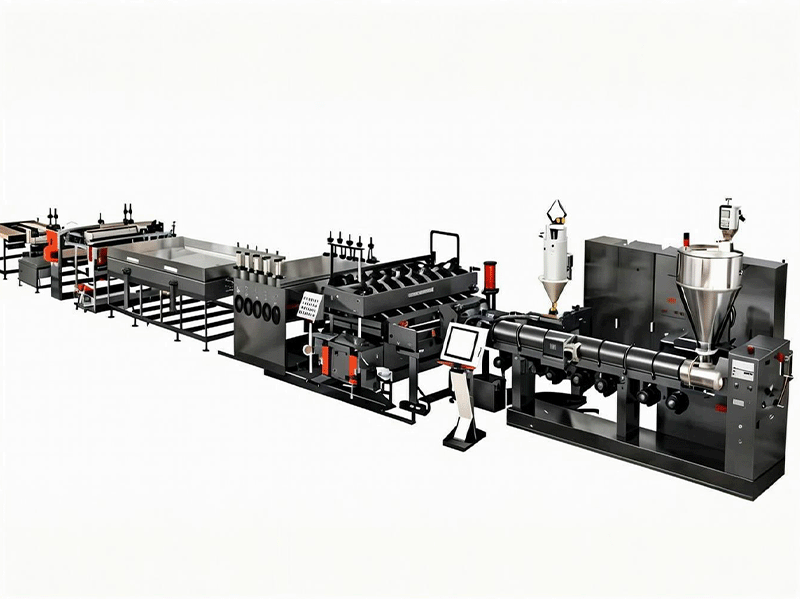
ZTECH PP Hollow Board Production Line for hollow-grid board extrusion.
A Practical Selection Matrix
| If the project starts with this requirement | First structure to evaluate | Reason for the first route |
|---|---|---|
| A flat pallet top or container liner specified with two faces and a hexagonal core | PP honeycomb sheet | The product is a face-and-core sandwich panel, so its production begins with layer formation, honeycomb forming, and composite processing. |
| A box, crate, divider, tray, or display component made by converting a cellular or ribbed board | PP hollow board | The final part begins as a continuous hollow-grid sheet and requires a defined conversion sequence. |
| A broad end-use label only, such as “returnable packaging” or “industrial protection” | Do not select either route yet | The finished cross-section and conversion method have not been defined. |
| An existing component that must be reproduced or replaced | Identify the current cross-section first | The existing component shows whether the production target is a sandwich panel or a hollow-grid profile. |
The matrix gives a first engineering direction, not a universal performance ranking. Board thickness, dimensions, surface treatment, functional requirements, and handling conditions are set at product level after the structure route has been chosen.
Information Needed for the Line Discussion
For the line discussion, prepare the finished component drawing or sample, target board-size range, intended material structure, and downstream conversion steps. Include the finished layout and rib direction for a hollow-board part, or the face-and-core arrangement and panel format for a honeycomb-sheet project.
Discuss Your PP Board Production Project With ZTECH
For a face-and-core panel, discuss the PP Honeycomb Sheet Machine route with ZTECH. For a hollow-grid sheet that will be converted into boxes, dividers, trays, or related parts, discuss the PP Hollow Board Production Line route. A component drawing or sample and the intended conversion process allow the line configuration to begin from the correct board structure.
FAQ
Are PP Honeycomb Sheet and PP Hollow Board Interchangeable Terms?
No. PP honeycomb sheet is a layered panel with face layers and a hexagonal core. PP hollow board is a continuous hollow-grid or ribbed profile. Both may be used in packaging, but they require different board constructions and production routes.
Can the Same Packaging Project Use Either Structure?
The same broad application category can include different component designs. A pallet panel specified as a face-and-core construction points to the honeycomb route, while a divider made from a cellular board points to the hollow-board route. The finished component determines the first route to evaluate.
Can One Production Line Make Both Products?
The two products use different forming principles. Honeycomb-sheet production combines multi-layer co-extrusion, honeycomb forming, and composite processing. Hollow-board production forms a hollow grid directly through extrusion and shaping. Select the finished board construction before discussing the production line.