

Bubble wrap is widely used to protect products during shipping, storage, and handling. However, choosing the right type is not simply a matter of buying the thickest material available.
The best choice depends on bubble size, film thickness, layer construction, product weight, surface sensitivity, and the amount of empty space inside the carton.
As a general rule, small bubble wrap is better for wrapping products directly, while large bubbles provide deeper cushioning around heavy or bulky items.
Standard Bubble Wrap Sizes at a Glance
| Bubble Type | Common Market Label | Typical Uses |
|---|---|---|
| Small bubble | 3/16-inch label; often around 9–10 mm in metric specifications | Glassware, ceramics, electronics, cosmetics, small parcels |
| Medium bubble | 5/16-inch label | General cushioning, artwork, medium-weight products |
| Large bubble | 1/2-inch label; commonly 20–32 mm in metric ranges | Furniture, machinery parts, heavy goods, void fill |
These labels are not always directly interchangeable. Some suppliers describe bubble diameter, while others refer to bubble height. Buyers should confirm bubble diameter, bubble height, and film gauge before placing a bulk order.
What Does “Standard Bubble Wrap” Mean?
Standard bubble wrap normally refers to a general-purpose polyethylene film with regularly spaced air cells. It is commonly supplied in clear rolls, perforated sheets, bags, and protective mailers.
In the United States, 3/16-inch small bubble is often treated as a standard option for everyday packaging. Metric suppliers may describe a similar product by its bubble diameter, such as approximately 10 mm.
Roll width and length also matter. Narrow rolls are practical for small parcels and packing stations, while wider rolls are more efficient for furniture, pallets, and large industrial products.
The most useful way to choose bubble wrap is to start with the product rather than the roll:
- Is the item light or heavy?
- Does it have sharp edges?
- Is its surface easily scratched?
- Will it be shipped through a parcel network?
- Does the package contain large empty spaces?
Bubble Wrap Thickness: Bubble Height Is Not Film Thickness
The phrase “bubble wrap thickness” can refer to two different specifications.
Bubble height describes the depth of the air cushion. Common commercial sizes include 1/16, 1/8, 3/16, 5/16, and 1/2 inch. Larger bubbles generally provide more cushioning depth, while smaller bubbles conform more closely to the product surface.
Film thickness refers to the plastic layer itself and is usually measured in microns. A product with large bubbles but a thin film may be more vulnerable to punctures than a smaller bubble made with a stronger film.
For industrial buyers, the specification should also include:
- Film gauge or micron thickness
- Number of layers
- Material composition
- Puncture and tear resistance
- Air retention performance
- Recommended storage and shipping cycle
Bubble Wrap Material and Layer Structure
Most bubble wrap is made from polyethylene, commonly LDPE. The material is lightweight, flexible, moisture-resistant, and suitable for many packaging applications.
A basic two-layer structure contains a bubble layer and a flat PE base layer. A three-layer structure adds another protective film layer, which can improve surface protection and handling strength.
For more specialized applications, multilayer and laminated structures are available. ZTECH’s air bubble film machinery includes 2-layer, 3-layer, 5-layer, and 7-layer configurations.
The 5-layer air bubble film machine can support in-line lamination with kraft paper, aluminum foil, EPE foam, or HDPE film. The nylon coextrusion air bubble film machine is designed for multilayer structures where longer air retention is required.
This is why “industrial strength bubble wrap” should not be judged by bubble size alone. Layer structure, material selection, and production consistency can be equally important.
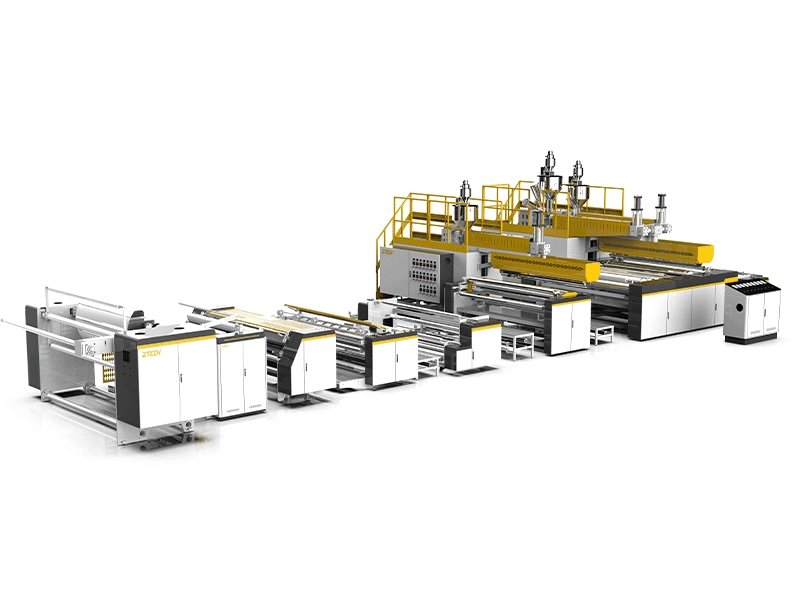
5-layer air bubble film lamination machine for composite packaging film production
Choosing Bubble Wrap for Different Products
Bubble Wrap for Glass
For glassware, small bubble wrap is usually the best starting point because it fits closely around the item and helps reduce surface contact between products.
Wrap each glass item separately. Protect handles, rims, corners, and other projecting parts with additional cushioning. For valuable or fragile products, use a strong carton, maintain protective space around the product, and add void fill to prevent movement.
A useful starting point is approximately 2 inches of cushioning between the product and the carton walls, although the final package should be validated according to product weight and shipping conditions.
For polished, painted, archival, or museum-quality surfaces, place acid-free tissue, foam, or another suitable interleaving material between the product and the plastic film. Bubble wrap is generally intended for short-term transport protection rather than direct, long-term contact with sensitive surfaces.
Electronics
Use anti-static bubble wrap for circuit boards, computer components, instruments, and other products that may be damaged by electrostatic discharge. Anti-static bubble wrap provides cushioning, but it should not be treated as a complete ESD shielding system unless the packaging system is specifically designed for that purpose.
Heavy or Bulky Products
Large bubble wrap provides a deeper air cushion and is more suitable for furniture, appliances, machinery parts, and irregularly shaped products. Industrial-grade or multilayer bubble film is useful when the package may experience sharp edges, repeated handling, or longer transportation cycles.
E-Commerce and High-Volume Packing
Perforated rolls, pre-cut sheets, bubble bags, and mailers can reduce packing time and material waste. ZTECH also provides perforation bag-making equipment and air bubble mailer machinery for businesses producing finished packaging products.
How to Use Bubble Wrap Correctly
For ordinary shipping, place the bubble side toward the product and the smooth side outward. Cover the entire item rather than wrapping only the visibly fragile section.
Use tape on the bubble wrap, not directly on the product. After placing the wrapped item in the carton, close the box and gently shake it. If the product moves, add more void fill or improve the carton fit.
Bubble wrap cushions impact, but it does not replace a strong box, edge protection, or proper internal blocking.
Common Bubble Wrap Mistakes
- Choosing by bubble size only
- Using bubble height as film thickness
- Wrapping the product without fixing empty carton space
- Protecting the glass body but not its edges
- Applying tape directly to the product
- Using standard bubble wrap for anti-static protection
- Assuming recyclable bubble wrap belongs in every curbside recycling bin
FAQs
Is small bubble wrap better than large bubble wrap?
Small bubbles are better for close-fitting surface protection. Large bubbles provide deeper cushioning and are more useful for heavy products or empty spaces inside a carton.
What is the best bubble wrap thickness for glass?
A 3/16-inch small bubble is a common starting point for glassware. Fragile or high-value glass also needs corner protection, void fill, and a suitable carton.
Is thicker bubble wrap always stronger?
No. Bubble height, film gauge, layer count, and material quality all affect performance. Ask for the complete specification rather than relying on one thickness number.
Can bubble wrap be recycled?
Recycling depends on local film-recycling programs. Do not assume that bubble wrap belongs in a standard curbside recycling bin. Reuse it when possible and check the disposal requirements in your area.
If you are producing standard bubble wrap, laminated bubble film, protective bags, or mailers, the right machinery depends on your target bubble size, film gauge, layer structure, raw materials, roll width, and output. Review the ZTECH bubble film machine range or contact ZTECH with your production requirements.