
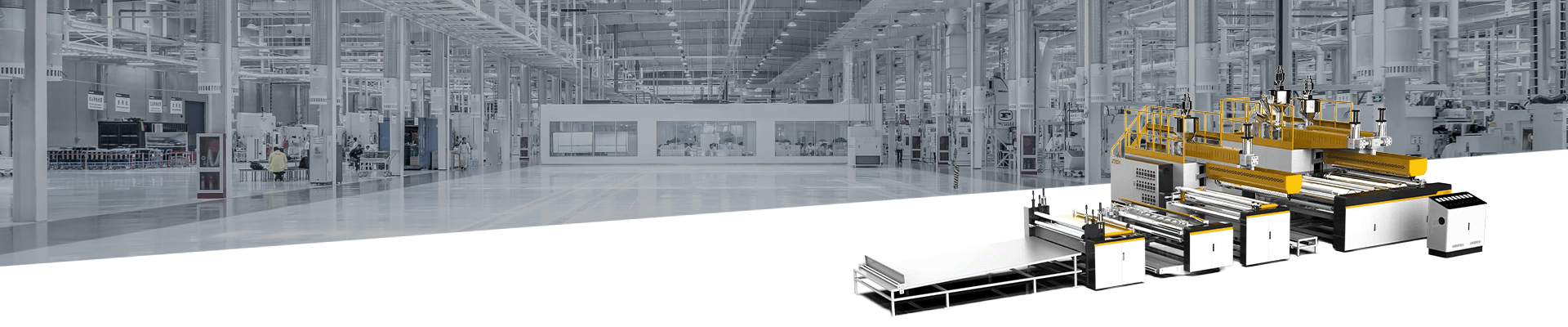
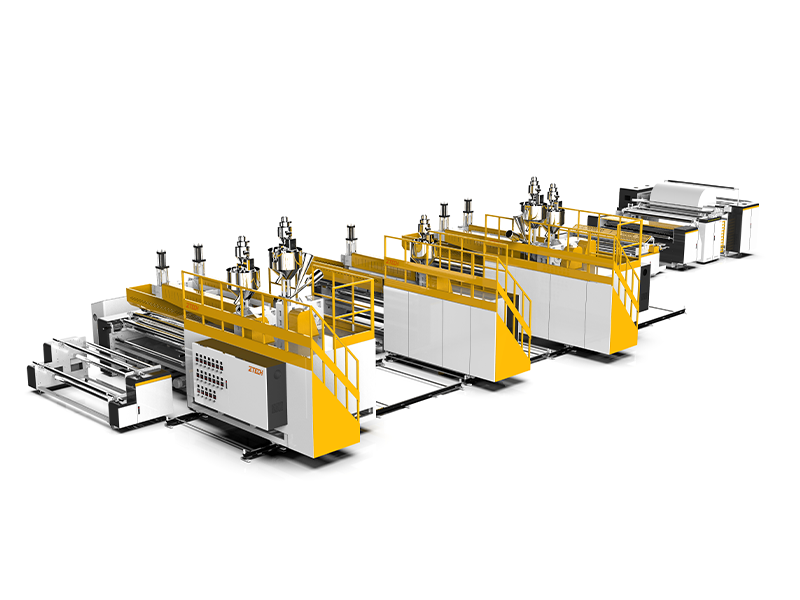
Traditional packaging methods are increasingly unable to meet the demanding requirements of high-end electronic products, fragile handicrafts, and long-distance transportation. Against this backdrop, the multi-layer bubble film machine, with its superior technological advantages, has become the preferred equipment for packaging manufacturers. As a highly efficient, intelligent, and highly customizable air bubble film machine, it represents more than just a simple equipment upgrade; it signifies a major leap forward in packaging material technology.
Defining the Multi-layer Bubble Film Machine
From a technical definition, a multi-layer bubble film machine is an advanced piece of equipment that processes multiple raw materials into multi-layered bubble films through co-extrusion or composite processes. Unlike basic air bubble film machines that can only produce simple double-layered bubble films, multi-layer machines have more complex mechanical structures and more precise control systems.
Working Principle and Production Process
The core of a multi-layer bubble film machine lies in its "multi-layer composite" capability. Its basic workflow is as follows:
Raw Material Melting and Extrusion: The equipment is equipped with two or more independent extruders. The raw materials required for different layers are heated, melted, and plasticized in the extruders.
Co-extrusion Composite: The molten polymer converges into a high-precision die. Through a special flow channel design, the multiple layers of material are combined at the die exit to form a planar film with a layered structure but a unified overall structure.
Bubble Forming: This is the most crucial step in an air bubble film machine. The planar film is covered onto a vacuum forming roller with concave holes. Through vacuum suction, the film is drawn into the holes to form bubbles, which are then rapidly cooled and solidified.
Composite Flat Layer: For machines with three or more layers, the equipment applies a flat plastic film to one or both sides of the bubble layer, forming a closed bubble pad structure.
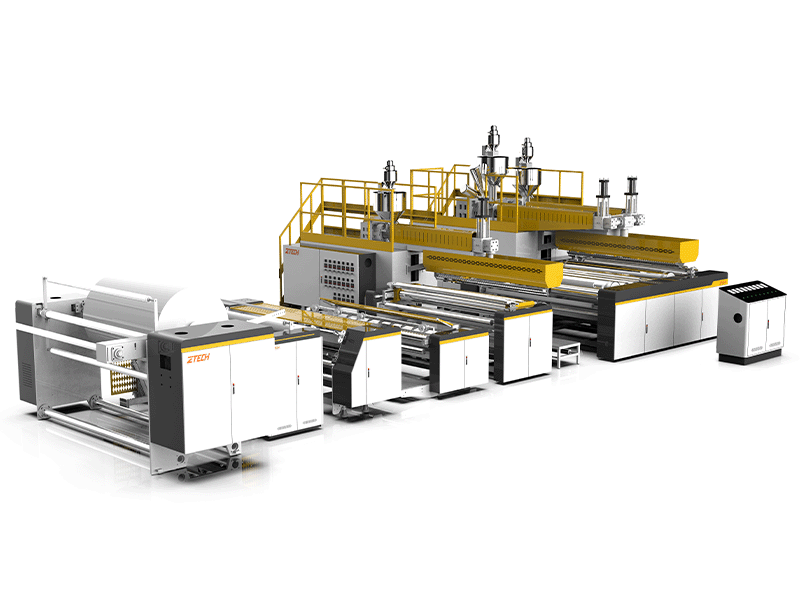
3-Layer Air Bubble Film Machine
Core Components and Their Technical Roles
To ensure consistent film quality, the multi-layer bubble film machine integrates several precision components:
T-Die: Made of high-quality alloy steel, its flow channel design is optimized for fluid dynamics, ensuring uniform pressure during multi-layer material lamination, resulting in extremely uniform thickness of the finished air bubble film.
Vacuum Forming Roller: This is the core component determining the bubble shape and strength. Advanced equipment typically features a high-efficiency circulating water cooling system, supporting high-speed production while ensuring full, leak-proof bubbles.
PLC Control System: Modern multi-layer bubble film machines often employ intelligent touchscreen operation, enabling real-time monitoring of parameters such as temperature, pressure, and rotation speed, achieving automated production.
Key Advantages of Using a Multi-layer Bubble Film Machine
For packaging manufacturers, investing in a high-quality multi-layer bubble film machine means gaining a technological advantage in the market. These advantages are mainly reflected in three dimensions: physical performance, customization capabilities, and long-term economic benefits.
1. Superior Physical Properties
The physical performance of a multi-layer structure far surpasses that of a single-layer material. During the production process of an air bubble film machine, by extruding material in layers, a "rigid-flexible" effect can be achieved.
Puncture Resistance: The multi-layer composite structure effectively disperses external forces. Even if the outer film is scratched by a sharp object, the inner layer can still maintain the integrity of the bubble.
Compression Resistance and Cushioning Force: Because multi-layer bubble film (such as a 5-layer or 7-layer structure) has support layers on both sides of the bubble, its compressive strength is several times higher than that of ordinary bubble film, providing more durable protection for heavy or expensive goods.
2. Flexibility in Functional Customization
A major appeal of multi-layer bubble film machines is their ability to "prepare materials on demand" according to customer needs. With multiple extrusion systems, manufacturers can add additives to specific layers without affecting overall costs:
Antistatic layer: In electronic product packaging, antistatic masterbatch can be added to both inner and outer layers.
UV protection layer: For building materials or agricultural products stored outdoors, UV stabilizers are added to extend packaging life.
Flame retardancy: Meeting fire safety standards in aerospace or specific industrial sectors.
This differentiated production capability is difficult to achieve with ordinary air bubble film machines.
3. Excellent cost-effectiveness
While the initial investment in a multi-layer bubble film machine may be higher than that of a basic model, its long-term operating costs are lower.
Reduced raw material consumption: Through multi-layer co-extrusion technology, manufacturers can achieve the same protective strength using thinner materials.
Recycled material utilization: In the production of multi-layer films, a certain proportion of recycled materials can be used in the middle layers, while the outer layers use virgin materials to ensure aesthetics and printing quality. This not only reduces costs but also aligns with global green and environmentally friendly trends.
Different Configurations of the Air Bubble Film Machine
Ztech offers a complete range of air bubble film machines, from budget-friendly to high-end industrial solutions. Configurations vary significantly depending on the number of layers and functions.
2-Layer & 3-Layer Air Bubble Film Machine
These are the most common air bubble film machine configurations on the market.
2-Layer: Consists of a flat film layer and a bubble layer. Primarily used for inner packaging or as a base material for making composite bubble bags.
3-Layer: A structure of "flat film + bubble + flat film". This symmetrical structure provides better flatness and protection, ideal for fragile packages in express logistics. Its production process is simple and efficient, making it a core piece of equipment for most e-commerce logistics packaging companies.
5-Layer & 7-Layer Air Bubble Film Machine
When more complex packaging solutions are needed, advanced configurations of multi-layer bubble film machines become particularly important.
These machines typically include an in-line lamination unit. They can fuse the bubble layer with other functional materials such as aluminum foil, EPE foam, kraft paper, or woven fabric. This high-configuration multi-layer bubble film machine primarily targets the high-end industrial protection and insulation market. For example, materials formed by laminating aluminum foil to both sides of the bubble film possess excellent barrier and heat-reflective properties, making them indispensable in construction and cold chain transportation.
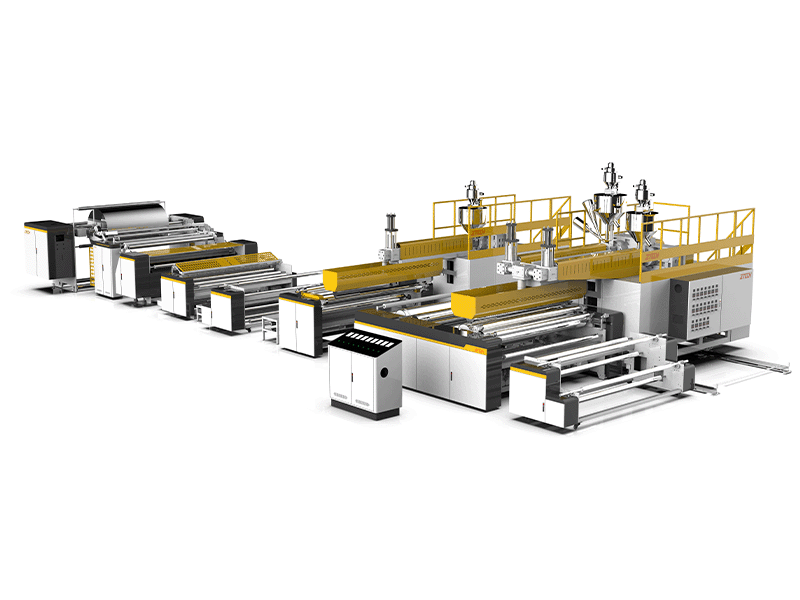
7-Layer Air Bubble Film Machine
Industrial Applications for Multi-layer Bubble Film Machine Products
With its diverse product forms, finished products manufactured by multi-layer bubble film machines have permeated all aspects of our lives.
1. E-commerce and Modern Logistics
With the surge in global express delivery volume, traditional cardboard packaging is insufficient to withstand high-frequency handling and vibration. High-strength three- or five-layer bubble wrap produced using air bubble film machines can significantly reduce cargo breakage rates and improve the consumer unpacking experience. This lightweight and efficient cushioning material is particularly ideal for ceramics, cosmetics, and artwork.
2. Electronics Industry and Precision Instruments
Electronic components are extremely sensitive to static electricity. Utilizing the co-extrusion technology of multi-layer bubble film machines, manufacturers can precisely control the surface resistivity of the film, producing anti-static bubble film. This film not only prevents physical impacts but also eliminates static electricity generated by friction, providing double protection for semiconductors, integrated circuits, and precision instruments.
3. Construction, Cold Chain, and Insulation Industries
In the construction sector, multi-layer bubble film machines with aluminum foil lamination are widely used as insulation layers for roofs and walls. The internal still air layer effectively blocks heat conduction, while the outer aluminum foil layer reflects most of the radiant heat. In cold chain transportation, this multi-layer structure maintains a constant temperature environment, ensuring that fresh food or medicine does not spoil during long-distance transport.
4. Automotive Parts and Furniture Protection
Large items such as bumpers and high-end leather sofas are most vulnerable to scratches and dents during transportation. By laminating EPE (expanded polyethylene) foam online using an air bubble film machine, the resulting material combines the elasticity of air bubbles with the abrasion resistance of EPE foam, providing comprehensive and close-fitting protection for these expensive products.
Conclusion
In summary, the multi-layer bubble film machine is not only a machine for producing packaging materials but also a core tool for the packaging industry to achieve transformation and upgrading, reduce costs, and improve protection standards. From basic protective functions to high-end industrial insulation, its diverse configurations meet the needs of different markets worldwide.
As a leader in bubble film machinery manufacturing, Ztech is committed to developing high-performance air bubble film machines. Our multi-layer bubble film machine series not only boasts high production capacity but also excels in energy-saving technology, extrusion precision, and operational automation. Ztech's multi-layer bubble film machine ensures that every roll of bubble film produced meets international standards, satisfying the packaging needs of various products.