
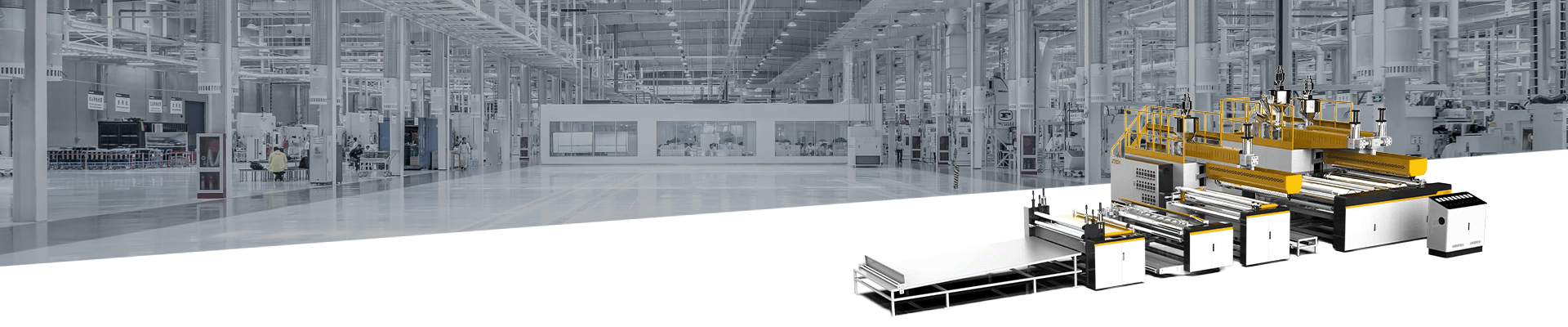
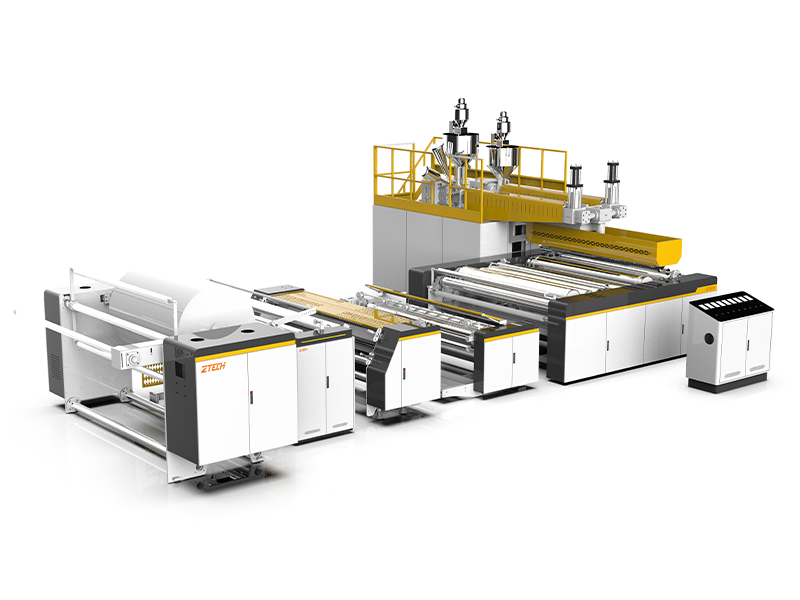
In the modern logistics and packaging industry, protecting products from damage during transportation has become a crucial aspect of business operations. With increasing production efficiency and packaging requirements, traditional bubble film production equipment can no longer fully meet the demands of large-scale, high-efficiency production. High-speed bubble film machines can not only significantly increase bubble film output but also maintain consistent quality and save on labor costs.
Key Components of a High-Speed Bubble Film Machine
To understand the operation of a high-speed bubble film machine, it's essential to first disassemble its complex mechanical structure.
1. Extrusion System
The extrusion system typically consists of a motor, reducer, screw, and barrel. For high-speed bubble film machines, the screw design is crucial. Ztech uses a special alloy steel screw, precision-ground, with an extremely high length-to-diameter ratio. This ensures perfect plasticization and homogenization of LDPE or LLDPE particles at high speeds, preventing issues like crystal points or uneven thickness in the bubble film.
2. T-Die Head
The die head determines the initial width and thickness uniformity of the film. In high-speed bubble film machines, the die head's flow channel design must be extremely smooth to minimize melt pressure fluctuations. A high-precision T-Die allows for real-time adjustment of the die lip gap via fine-tuning bolts, ensuring that the produced film maintains stable basis weight even at operating speeds of tens of meters per minute.
3. Bubble Forming Roller
This is the most technologically advanced part of the air bubble film machine. The forming roller's surface is covered with precise suction holes, connected to a powerful vacuum system. As the molten plastic film flows over the roller, the vacuum pressure draws it into the die holes, forming individual bubbles. The forming roller of the high-speed bubble film machine is equipped with a highly efficient circulating water cooling system, which instantly sets the bubbles, preventing deformation or breakage due to insufficient cooling during high-speed operation.
4. Laminating and Cooling Units
For producing three-layer or more bubble film, the air bubble film machine is equipped with additional composite rollers. These precisely press the base film, bubble layer, and top film together. The cooling unit uses air or water cooling to further reduce the film temperature, enhancing the film's stiffness and transparency.
5. Automatic Winding System
At the end of the high-speed bubble film machine production line, the winding system is responsible for winding the finished film into neat rolls. Ztech's equipment typically features a dual-station automatic flip-winding machine, supporting automatic cutting and automatic roll changing. This significantly reduces downtime, ensuring continuous mass production.
6. PLC Control System
Modern high-speed bubble film machines rely heavily on a central control system. Through integrated PLC control, operators can precisely set temperature, rotation speed, traction speed, and tension on a touchscreen. This digital management simplifies operation and ensures data traceability.
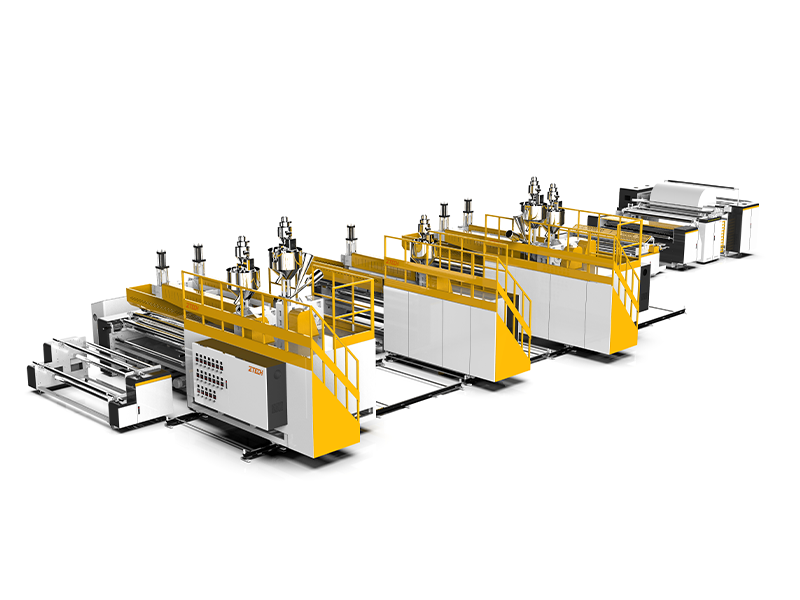
7 Layers Air Bubble Film Lamination Machine
How a High-Speed Bubble Film Machine Operates
Transforming raw materials into protective packaging materials is a highly synchronized mechanical process.
Raw Material Preparation and Plasticization
First, low-density polyethylene particles, sometimes with added antistatic agents, masterbatches, or recycled materials, are fed into the hopper of the air bubble film machine via a feeder. Inside the barrel, electric heating coils control the temperature in stages. The shear heat generated by the screw rotation, combined with external heat sources, transforms the plastic particles into a uniform molten state under pressure.
Melt Extrusion and Casting
The molten plastic fluid passes through a filter and enters the T-Die die. The die flattens the cylindrical fluid into a thin sheet. For a typical three-layer high-speed bubble film machine, two or more extruders operate simultaneously, forming the bubble layer, planar layer, and composite layer respectively.
Vacuum Forming
This is where the magic happens. The first film layer adheres tightly to a high-speed rotating vacuum forming roller. The negative pressure generated by the vacuum pump draws the film into the holes on the roller surface. Due to the extremely high operating speed of the high-speed bubble film machine, this process is completed within milliseconds. Immediately afterwards, the second film layer is bonded to the bubble-containing film under the action of the pressure rollers, sealing the air inside the bubbles.
In-line Lamination and Trimming
If the customer requires reinforcing materials, the air bubble film machine will in-line laminate aluminum foil, woven fabric, or kraft paper. Subsequently, a circular blade shearing device will trim off the uneven edges of the bubble film. The trimmed edges are automatically sucked back into the extruder by a recycling device for recycling, reflecting the environmentally friendly design of the high-speed bubble film machine.
Cooling and Tension Winding
The formed film passes through a series of guide rollers and cooling rollers. To ensure finished product quality, air bubble film machines must possess a precise tension control system to prevent the film from being overstretched and flattened during winding. Finally, the winding machine winds it into a finished roll that meets specifications.
Why Invest in a High Speed Bubble Film Machine Over Standard Models
From a long-term development and ROI perspective, high-speed bubble film machines offer unparalleled advantages.
Enhanced Productivity
This is the most obvious difference. A standard air bubble film machine might operate at 20-25 meters per minute, while a high-quality high-speed bubble film machine can stably operate at 50 meters per minute or even higher. This means double the output in the same amount of time, helping companies handle large, urgent orders more easily.
Energy Efficiency
Although the total power consumption of a high-speed bubble film machine may be slightly higher, its higher output results in lower energy consumption per unit of product. Ztech's high-speed models minimize electricity waste and reduce the production cost per square meter of bubble film through optimized heating systems and variable frequency technology.
Labor Savings
High-speed bubble film machines are typically equipped with more advanced automation features, such as automatic roll changing and online waste recycling. This means a single operator can oversee multiple production lines simultaneously, effectively alleviating the pressure from rising labor costs. Simultaneously, automated air bubble film machines reduce human intervention, lowering the defect rate due to operational errors.
Consistency and Quality
High-speed production places extremely high demands on the stability of the machinery. Therefore, high-speed bubble film machines are usually manufactured with a thicker frame structure and higher-precision dynamic balancing. This stability translates into products with full, consistent bubble thickness and high peel strength. High-quality finished products give you stronger negotiating power when dealing with high-end clients, such as electronics manufacturers.
Customization and Flexibility
Professional air bubble film machine suppliers like Ztech can customize molds according to customer needs. Whether producing large or medium bubbles, high-speed models can achieve product diversification through quick roller changes while maintaining efficiency.
Applications of High-Speed Bubble Film Machines
The applications of bubble film produced by high-speed bubble film machines have far exceeded our imagination, permeating every corner of industry.
Logistics and Packaging Industry
The material produced by air bubble film machines has become a "protective shield" for packages. From filler bags to bubble envelopes, its extremely light weight provides excellent cushioning, significantly reducing damage during cross-border transportation.
Electronic Product Protection
Electronic components are extremely sensitive to static electricity and vibration. By adding antistatic masterbatch during the high-speed bubble film machine production process, pink or blue antistatic bubble film can be produced. This specialized material is widely used in the inner packaging of mobile phone screens, motherboards, and semiconductor components to prevent electrostatic discharge and physical impact.
Furniture and Appliance Transportation
Large items such as sofas, refrigerators, and wooden furniture are easily scratched during handling. Using thickened bubble film produced by large-width air bubble film machines, combined with a pearl cotton composite layer, provides all-around impact protection.
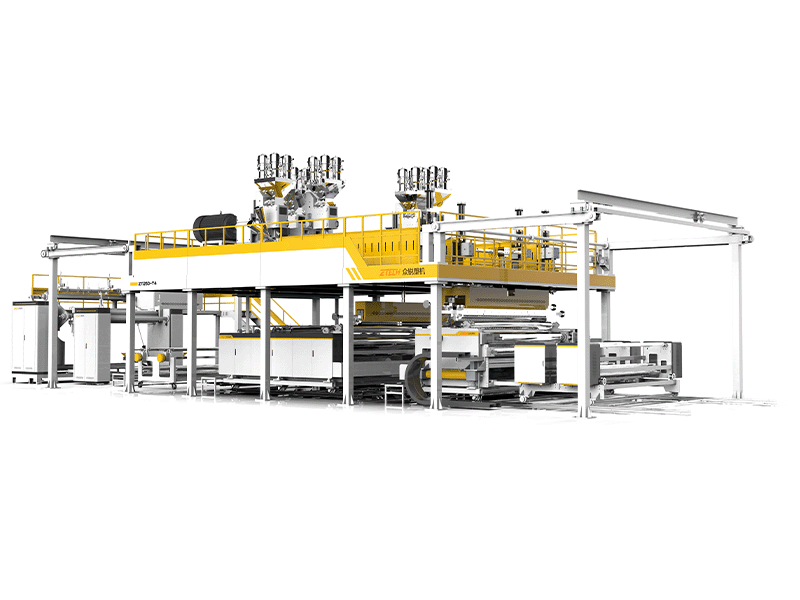
ABA Coextrusion Air Bubble Film Machine
Conclusion
High-speed bubble film machines not only improve bubble film production efficiency but also ensure consistent product quality. For companies looking to enhance their competitiveness in the packaging and logistics sectors, choosing an advanced air bubble film machine is a wise decision.
Among numerous brands, Ztech has become a trusted partner for businesses thanks to its leading technology, stable equipment, and comprehensive service. Whether for large-scale logistics companies or electronics and furniture manufacturers, Ztech's high-speed bubble film machines can meet diverse production needs and create greater value for businesses.