

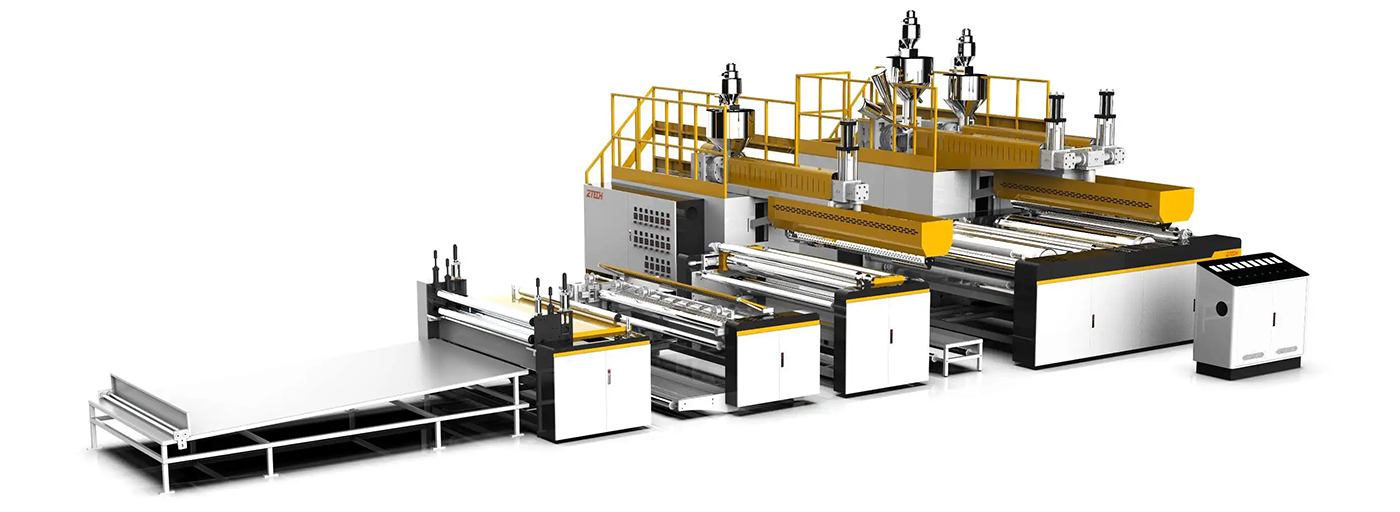
Planning a PP sheet or board production line is easier when the discussion begins with the finished product rather than a machine name. A project may be described as a “PP board line,” but that phrase can cover products with different structures, delivery forms, and downstream needs. If those differences are not clarified early, the project team can end up discussing equipment before it has agreed on what the line must actually deliver.
The first planning question is therefore simple: what PP sheet or board will the project produce, and how must that product leave the line or enter the next operation? From there, the team can map the production responsibilities, identify the handoffs that affect downstream work, and prepare a clearer technical discussion with a supplier.
Define the Project and the PP Product You Need to Deliver
Before discussing a line, define the project itself. Is the goal to launch a new product, add capacity for an existing product, broaden a product range, or change the way a finished sheet or board is delivered to the next operation? The answer changes the questions that matter.
A new project may still be choosing between several product paths. An expansion project may already know the product but need to align a new line with current packaging, storage, or conversion steps. A product-extension project may need to understand which parts of the existing workflow remain relevant and which must be reconsidered. These are different planning situations even if every discussion uses the words “PP sheet” or “PP board.”
Start with the product path, not with an assumed equipment configuration. For this category, the first split is between the following finished-product directions:
- PP Bubble Sheet for projects centered on a bubble-sheet product and its required delivery form.
- PP Bubble Board for projects centered on a more board-oriented bubble product.
- PP Film Sheet for flat-sheet projects.
- PP Hollow Board for hollow-board projects.
- PP Honeycomb Sheet for honeycomb-structure sheet projects.
A product name alone does not complete the project definition. The team must also state the intended application, available material or structure information, specification language, and required delivery form. If the project is still choosing between a bubble product, a flat sheet, a hollow structure, or a honeycomb structure, record that decision as open rather than forcing an early machine-model choice.
Choose a Product Direction Before Planning the Line
Product selection does not need to begin with a detailed machine comparison. Begin with the finished item and use the same questions for every direction under consideration.
| Decision question | What the team should clarify |
|---|---|
| What must the product do? | The intended application and the problem the finished sheet or board must address. |
| What form must it take? | Whether the project is considering a bubble product, flat sheet, hollow board, or honeycomb sheet. |
| How will it be delivered? | The output condition required by the next activity, storage, packaging, or shipment. |
| What happens next? | Whether another internal or external process must receive the output. |
The goal is not to choose a route from a product name alone. It is to identify the information that separates one product direction from another. If two directions remain possible, record both and identify the missing decision rather than treating either as a settled line specification.
When the project is ready to compare the available product directions, start with PP Sheet Board Machinery rather than treating one product page as a substitute for the comparison.
What Changes the Line Discussion for Each PP Product Direction
The first line discussion changes with the product form. The point is not to turn these five directions into a generic equipment checklist; it is to make sure the product language gives the project and supplier the right starting inputs.
| Product direction | Product form to establish | Planning discussion to start with |
|---|---|---|
| PP Bubble Sheet | A thick PP bubble-sheet product | Intended protective application, material requirement, and required sheet delivery form |
| PP Bubble Board | A three-layer PP bubble sheet or board | Whether the required output is described as a sheet or board, plus its finished delivery form |
| PP Film Sheet | A flat PP or PE sheet product | Material choice, finished-sheet dimensions, and the next handling step for individual sheets |
| PP Hollow Board | A board with a hollow grid structure | Required board structure, the project’s specification language, and the receiving condition after production |
| PP Honeycomb Sheet | A PP sheet with a honeycomb structure | Target product form, application requirements, and the next-stage handling or delivery arrangement |
For example, a PP Film Sheet project should not borrow a hollow-board description simply because both outputs are flat enough to be called “sheet.” A PP Bubble Board project should also define its finished form before the discussion turns to delivery or downstream handling. The useful early decision is the product form the project must deliver, followed by the information the next operation needs to receive it.
Build a Planning-Level Process Map for Your Product Path
Use a planning-level flow before discussing a detailed line layout. It should be specific enough to show what the project needs to achieve, but it should not suggest that every PP sheet or board uses the same technical sequence.
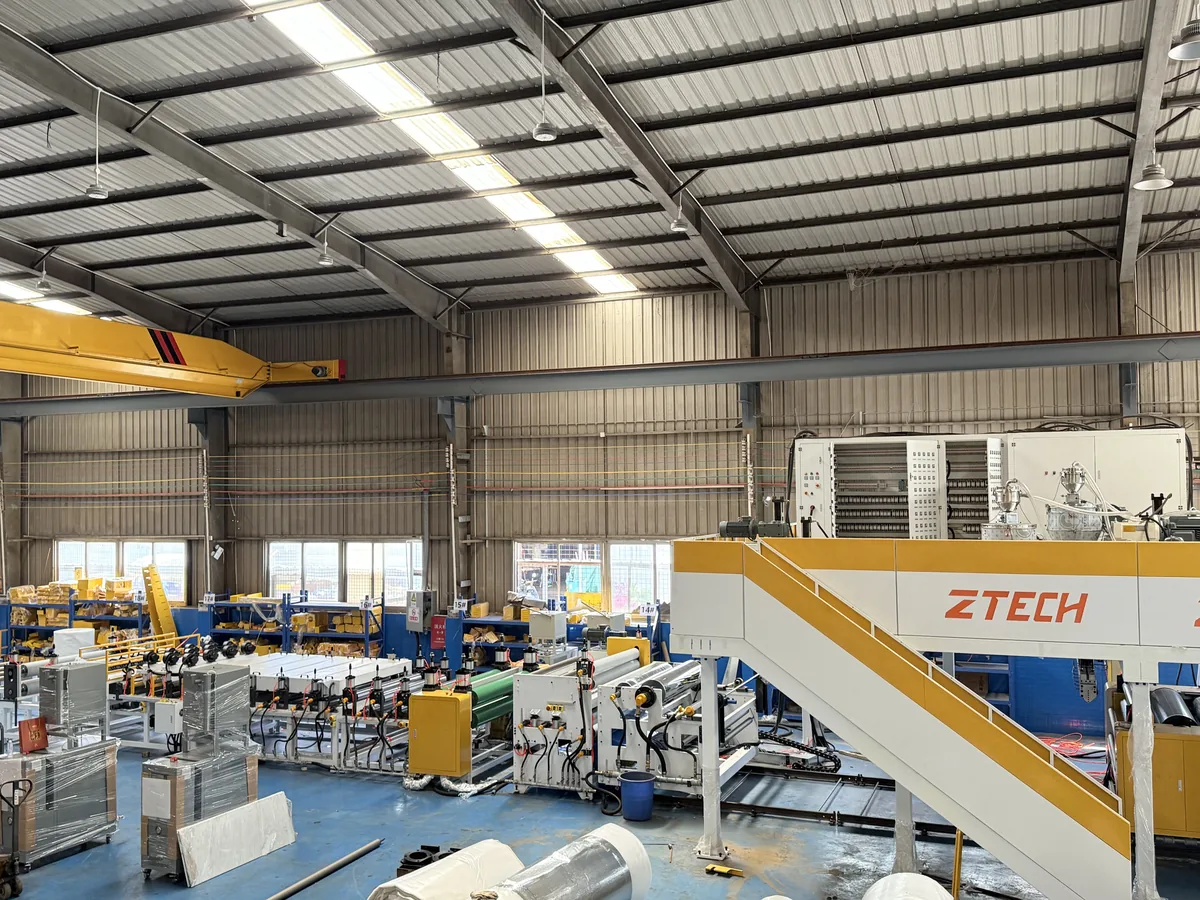
Production-line overview for early project discussions. PP Sheet Board Machinery
Separate Main Production From Product Delivery
The first part of the map describes the main production result: the PP sheet or board that the project intends to make. The second part describes product delivery: the condition in which that output must be available for the next agreed activity. Treating these as separate responsibilities is important. A product can be correctly defined while its delivery form is still unclear.
Use this five-point map:
- Define the finished product, application, and available specification language.
- State the production result that the line must deliver: the selected PP sheet or board form.
- Define how that output should leave the main production stage.
- Name the next receiving activity, whether it is conversion, handling, storage, packaging, or shipment.
- Record the information that is still needed before a detailed configuration discussion.
This creates a visible chain of responsibilities: product definition, product creation, output form, receiving activity, and unresolved decisions. It is not an operating procedure and it does not assume a fixed machine combination.
Map the Required Handoff
The finished-product form determines the handoff that needs to be discussed. A flat-sheet project, a hollow-board project, and a bubble-product project may use different product language and may need different delivery arrangements. The useful question is whether the project has described the output clearly enough for the next activity to receive it.
Do not begin with an equipment list copied from another project. A list can look complete while leaving the central questions unanswered: What is the intended output? In what form must it be received? What information does the next activity need? Those questions establish the purpose of the later line discussion.
The map can fit on one working page. If the team cannot read the product, output form, receiving activity, and open decisions together, it is too early to treat a broad PP board request as a finished equipment scope.
Identify the Handoffs That Change Downstream Operations
Each handoff is the moment when the product becomes the input for another activity. It may be an internal transfer, a conversion step, a warehouse activity, a packaging stage, or a shipment requirement. Describe it in language the receiving activity can use.
Define the Receiving Condition
“Finished product” is not enough. The team should state the condition in which the product must arrive. Depending on the project, the receiving activity may expect continuous material, individual sheets or boards, grouped units, protected product, or another agreed arrangement. Record the required condition before deciding how it will be achieved.
Ask:
- Is the product intended to continue into a following conversion or fabrication operation?
- Must the product be supplied as a continuous material, individual pieces, or a managed stack of boards?
- Is there a defined handling or packaging requirement before the product can move to the next party?
- Does the project have an existing downstream operation that the new line must connect with?
- Which requirements are known, and which remain to be determined with the supplier or internal team?
These questions do not prescribe a universal answer. They stop the project from overlooking a decision that can change the scope of the next stage. For example, “cutting” is not a complete requirement until the team has defined the required product form, how it will be received, and what the next activity expects. The same principle applies to winding, stacking, packaging, or another post-production function.
Assign the Next-Stage Owner
The team also needs to name who receives the output. When the same production group owns the next step, the handoff may be an internal operating boundary. When another department, a contract converter, a warehouse, or a customer process receives it, the interface must be described more explicitly. In either case, the receiving owner should be able to state what it needs and what remains undecided.
Use a handoff table during early planning. It can be simple:
| Handoff question | Project answer | Owner | Open item |
|---|---|---|---|
| What product path is being planned? | Product / project team | ||
| How must output be delivered to the next activity? | Production / operations | ||
| Who receives the output? | Project owner | ||
| What downstream activity follows? | Operations / commercial team | ||
| Which requirement still needs clarification? | Assigned owner |
The value of this table is not the format. It makes the unresolved items explicit. A supplier discussion can then focus on the actual interfaces instead of trying to infer them from a short product name or a request for a “complete line.”
Plan Around an Existing Downstream Operation
An expansion or replacement project may need to connect with an activity that already exists. In that situation, the existing operation should be described as a receiving interface, not as an assumed proof that the new line will fit it automatically.
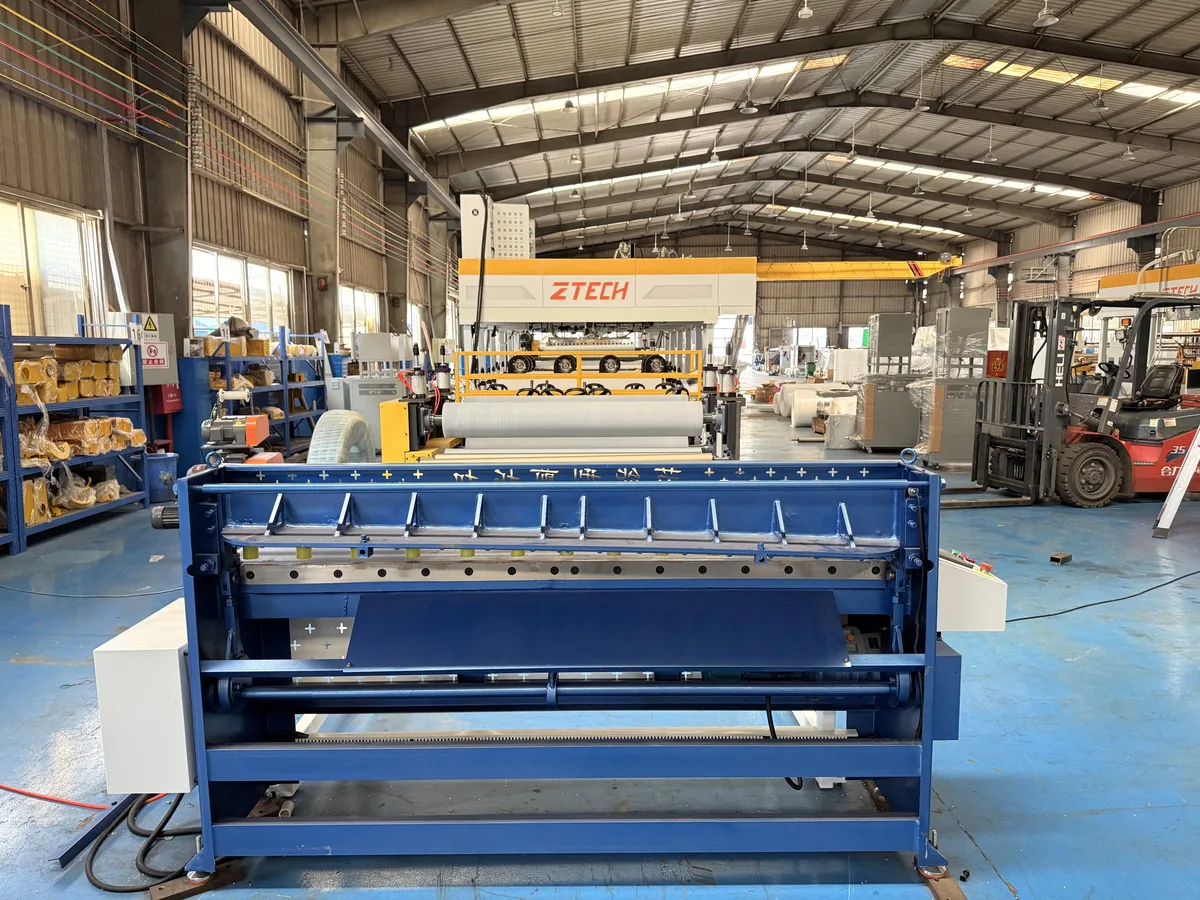
Equipment view for discussing output handoffs and receiving interfaces. PP Sheet Board Machinery
Ask the receiving team four practical questions: What condition must it receive? Who owns that activity? Which handling, timing, storage, or packaging constraints are already known? What information is still missing before the interface can be defined? The answers give the project a focused way to discuss continuity without claiming compatibility before the relevant requirements are clear.
This also prevents a common handoff problem: one team defines the new product while another team later discovers that the required delivery condition was never agreed. Record the interface owner and the remaining questions in the same project brief used for the supplier discussion.
For a project that has confirmed a hollow-board direction, Guide to PP Hollow Board Production Line & PP Hollow Boards provides product-level background before the discussion moves to PP Hollow Board Production Line. Other product directions should follow their own product-level discussion rather than being treated as interchangeable.
Collect the Product and Project Inputs Before Equipment Discussions
Good equipment discussions start with a usable input set. It does not need to answer every detailed question before the first conversation. It does need to separate confirmed information from matters that still require a decision.
Product Inputs
Begin with the finished product. Record the selected product direction, intended application, and the way the project currently describes its material and structure. If the project has drawings, samples, customer requirements, or an existing product reference, list them as available inputs rather than trying to convert them immediately into a machine specification.
Also capture how the product will be specified. A team may have dimensions, a drawing, a target finished form, an application requirement, or a customer-defined format. The immediate goal is to retain that language accurately so that internal teams and the supplier are discussing the same product.
Delivery and Interface Inputs
Then document what is known about output form, handling, the next activity, packaging, storage, or shipment. If the final arrangement is unknown, record it as an open item. An open item is more useful than an unsupported assumption because it can be assigned and resolved.
The following checklist can support an initial conversation:
- Target PP product path and intended application
- Known material and product-structure information
- Current dimensions, drawing, sample, or specification expression
- Required finished-product form and delivery arrangement
- Known downstream processing, handling, packaging, or storage needs
- Existing upstream or downstream interfaces that the project must retain
- Project constraints or questions that require discussion
- People responsible for product, production, operations, purchasing, and project coordination
Open Questions and Ownership
Assigning ownership matters. The product or market team can usually explain the intended application and product expectation. Production and process personnel can explain existing material knowledge, operating context, and current interfaces. Purchasing and project coordination can gather the commercial, timing, site, and communication requirements needed for a structured discussion. No single role needs to answer every question alone.
This division of work improves the first supplier conversation. Instead of asking for a generic line and then discovering missing decisions one by one, the project can present a concise set of known inputs, identify its open items, and ask for a discussion focused on the relevant product path. It also makes later decisions easier to trace because the team can see which requirement came from the product, which came from downstream operations, and which remains a configuration question.
A Scoped PP Project Example: From Product Requirement to Supplier Brief
One ZTECH project for an Indian customer began with three clear requirements: produce bubble film from 100% PP and recycled material, process it into bubble-film sheets, and achieve a finished width of 2.5 meters. Those requirements defined the product, material basis, and finished-sheet scope before the configuration discussion began.
The project response addressed PP material plasticization, wide-width sheet consistency, cooling, and a high-low dual T-die arrangement. Those details belonged to this customer’s material and finished-sheet requirement; they are not a standard configuration for every PP sheet or board project.
The planning lesson is straightforward: record the material basis, finished product form, and required width together. A supplier can then discuss the relevant production and delivery questions from a defined brief, instead of trying to infer the project from a general request for a PP line.
Decide What Must Be Known Now—and What Can Wait
A project does not need every detail before the first supplier conversation. It does need enough information to define the discussion and prevent assumptions from being presented as requirements.
Prepare the following before the first detailed discussion: the intended product direction, intended application, available product information, required delivery form, known receiving interface, and the people responsible for unresolved decisions. These items establish what the project is trying to achieve and who can answer the next questions.
Other details can remain open when they are clearly labelled and assigned. For example, the project may still be finalizing a product specification, a downstream arrangement, or an interface requirement. The right response is not to delay every conversation. It is to show what is confirmed, what is open, and what information will resolve it.
Resolve Open Decisions in a Practical Planning Sequence
Use the following sequence to keep open decisions visible:
- Confirm the product and required delivery form.
- Map the main production result, the handoff, and the next receiving activity.
- Separate confirmed inputs from questions that still need an owner.
- Put the outcome into a short supplier discussion brief.
Do not treat a product-page description or a common function from another project as a substitute for the project’s own requirements. End the planning meeting with a decision list showing what is confirmed, what remains open, who owns the next clarification, and what information will close it.
Turn the Plan Into a Supplier Discussion Brief
Once the project has completed the earlier steps, turn the outcome into a one-page supplier discussion brief. The brief does not need to replace a formal technical specification. It is the practical document that keeps the first detailed conversation anchored to the product and its downstream reality.
Use a One-Page Discussion Brief
Use the following structure:
| Brief section | What to provide |
|---|---|
| Target product | The selected PP Bubble Sheet, PP Bubble Board, PP Film Sheet, PP Hollow Board, or PP Honeycomb Sheet path |
| Application | What the finished product is expected to support |
| Product information | Known material, structure, drawings, samples, dimensions, or specification language |
| Delivery form | How the product should be handed to the next operation, warehouse, or shipment stage |
| Downstream context | Known conversion, handling, packaging, storage, or customer interface requirements |
| Existing interfaces | Upstream or downstream conditions that the project must consider |
| Open decisions | Questions that still need supplier or internal clarification |
Keep the brief factual. If an item is unknown, write “to be confirmed” and assign an owner rather than inventing a requirement. The purpose is to make a productive discussion possible, not to make the project look more complete than it is.
Plan the Line From the Product Backward
A PP sheet or board line should be planned from the finished product backward. Define the output and required delivery form first, then map the handoff and collect the information needed for a focused supplier discussion.
If you are preparing a PP sheet or board project, contact ZTECH with the intended product path, known product information, required delivery form, and downstream requirements. ZTECH can use that project brief to start a focused discussion around the relevant production-line path.
FAQ: Planning Questions Before a PP Sheet Board Line Discussion
Can a supplier discussion start before every requirement is final?
Yes. The project can begin with a concise brief that separates confirmed information from open decisions. The key is to identify what still requires clarification and assign an owner instead of presenting an assumption as a fixed requirement.
What should the team do when an existing operation must receive the new output?
Describe the receiving condition, the responsible team, and the information that the existing operation needs. This turns a general compatibility concern into a defined handoff for the supplier discussion.
What if more than one PP product direction is still possible?
Keep the viable options visible and compare them through the finished product, intended application, required delivery form, and next receiving activity. The purpose of the first discussion is to identify the missing decision, not to force an early equipment choice.
Who should maintain the supplier discussion brief?
One project owner should maintain the brief, but the information should come from the teams that own the product, production, receiving interface, and purchasing requirements. The brief remains useful when it records each open item together with the person responsible for clarifying it.