
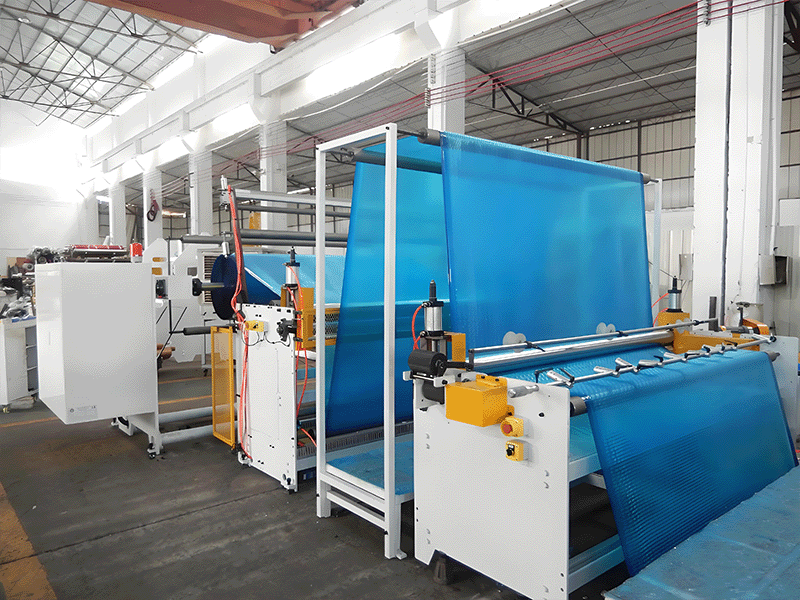
In the modern logistics and packaging industry, bubble film machines have become indispensable equipment, especially in e-commerce, industrial product transportation, and the protective packaging of high-precision instruments. With the diversification of market demands, the choice between 2-layer and 3-layer air bubble film machines has become a crucial issue when purchasing equipment. This article will analyze the differences between the two from multiple dimensions, including structure, performance, and applicable scenarios, to help companies make more informed decisions.
Understanding the Basics of a 2-Layer Air Bubble Film Machine
The 2-layer air bubble film machine is currently the most widely used basic production equipment in the packaging industry. The finished product produced by this machine is usually called "single-sided bubble film." Physically, it consists of two layers of film: a flat PE base film and a bubble layer formed by vacuum rollers. These two layers are tightly bonded together by pressure rollers under high temperature, forming numerous independent small air pockets.
Core Advantages Analysis
Simple Structure: As an entry-level device in the bubble film industry, the mechanical structure of the 2-layer air bubble film machine is very intuitive. From the extruder and T-die to the vacuum forming system, its operation is relatively simplified. For manufacturers new to the packaging industry, the debugging and daily maintenance of this equipment are relatively easy to learn, requiring no extremely advanced technical background.
High Cost-Effectiveness: In terms of initial capital investment, the 2-layer air bubble film machine has a significant price advantage. The required raw materials (mainly LDPE and LLDPE) have simple proportions, and due to the reduction of one composite layer, the consumption of raw materials is relatively low. For startups with limited budgets or primarily targeting the low-end mass market, this machine offers the fastest return on investment.
Smaller Footprint: Due to its compact structure, this type of machine typically occupies less space than multi-layer laminar flow machines. For leased standard factory buildings or space-constrained processing workshops, a 2-layer air bubble film machine allows for more flexible production line layouts, optimizing factory space utilization.
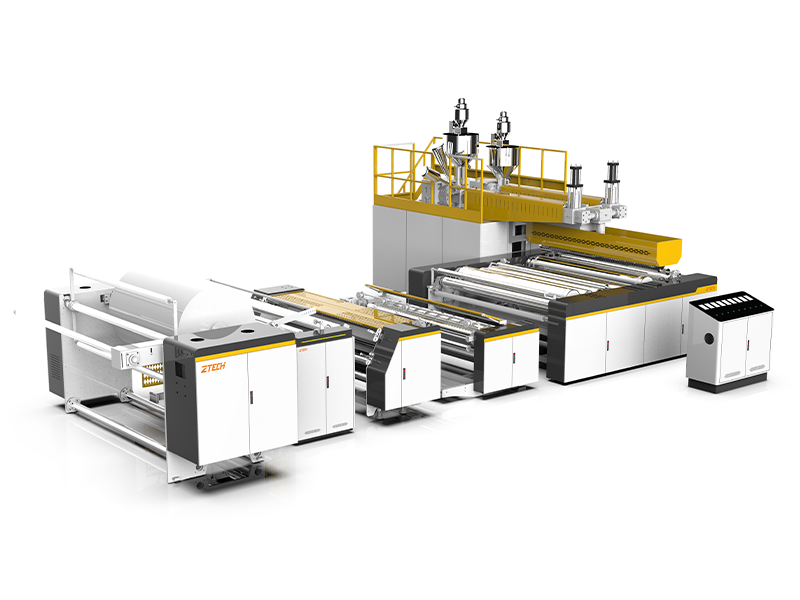
2 layer air bubble film machine
Typical Applications
The bubble film produced by this machine is primarily used for basic physical filling and scratch protection.
Small parcels for express delivery and e-commerce: Provides basic cushioning for books, daily necessities, etc.
Logistics and relocation packaging: Protects furniture edges, tableware, etc.
Lightweight industrial products: Prevents minor scratches on the surface of electronic components.
Why Consider Investing in a 3-Layer Air Bubble Film Machine
As market demands for packaging quality increase, 3-layer air bubble film machines are gradually becoming standard equipment in high-end manufacturing. The finished product produced by this machine has a structure similar to a "sandwich": a bubble layer in the middle, covered with a smooth PE film on both the top and bottom. This structure ensures that the air bubbles are sealed inside and no longer exposed.
Core Technological Advantages
Superior Protection
During the production process of the 3-layer air bubble film machine, the air is more effectively trapped inside the bubbles because they are tightly wrapped by two layers of flat film. This structure significantly improves the film's compressive strength and cushioning. Even under the heavy pressure of long-distance transportation, the three-layer bubble film is less prone to large-scale bubble rupture due to pressure from sharp objects.
Smooth Double-Sided Surface
Compared to the uneven texture of a single side produced by a 2-layer air bubble film machine, both sides of the three-layer film are very smooth.
High-Quality Printing: Brand logos, warnings, or colored patterns can be printed directly on the smooth surface.
Post-Lamination Functionality: This smooth surface is ideal for online lamination of other materials. For example, Ztech's 3-layer air bubble film machine can easily laminate aluminum foil, pearl cotton, or kraft paper.
Exceptional Durability: The three-layer film, with its additional protective layer, experiences a significant leap in tear resistance and puncture resistance. In long-haul sea freight or heavy-duty industrial transport, it offers longer-lasting protection, demonstrating a higher level of professional packaging.
Applicable Scenarios
High-end Electronics: Laptops, displays, precision sensors, and other products with extremely high shock resistance requirements.
Building Insulation Materials: Triple-layer bubble film produced by laminating aluminum foil can serve as a high-quality thermal insulation layer for roofs and walls.
Precision Instruments and Automotive Parts: Coping with vibration and friction in complex transportation environments.
2-Layer Air Bubble Film Machine vs. 3-Layer Air Bubble Film Machine
Understanding the fundamental differences between 2-layer and 3-layer air bubble film machines is crucial in the actual purchasing process.
From a production process perspective, 2-layer machines typically have one extruder, making material distribution relatively simple. Advanced 3-layer air bubble film machines, on the other hand, are often equipped with more precise die heads to ensure uniform thickness distribution of the three layers of film. Three-layer machines require higher synchronous control precision in the lamination process to prevent wrinkles on the film surface during lamination.
From a product value perspective, although the initial purchase cost and power consumption of a 3-layer air bubble film machine are slightly higher than those of a 2-layer machine, the unit price and added value of its finished products are higher. As consumers increasingly demand environmental friendliness and aesthetically pleasing packaging, the competitiveness of 3-layer bubble film in the market is rapidly surpassing that of basic products.
|
Comparison Feature |
2 Layer Air Bubble Film Machine |
3 Layer Air Bubble Film Machine |
|
Film Structure |
1 Flat Layer + 1 Bubble Layer |
2 Flat Layers + 1 Middle Bubble Layer |
|
Appearance |
One side smooth, one side textured |
Both sides smooth (Sandwich structure) |
|
Protection Strength |
Standard cushioning for light items |
High load-bearing and puncture resistance |
|
Air Retention |
Standard |
Superior (Bubbles are sealed between films) |
|
Lamination Capability |
Limited |
High (Ideal for Foil, Kraft Paper, or EPE) |
|
Material Consumption |
Lower (Cost-effective) |
Higher (Increased resin usage) |
|
Main Applications |
E-commerce, express delivery, furniture |
Industrial parts, thermal insulation, electronics |
How to Choose the Right Equipment for Your Production Line
The choice of which equipment to purchase depends on your target customer group.
First, assess your market positioning. If your main customers are local small e-commerce sellers who are extremely price-sensitive and have low packaging requirements, then a 2-layer air bubble film machine is a very solid starting point. Its low operating costs allow you to maintain profit margins in fierce price wars.
Second, consider product diversity. If you want to diversify your business, such as entering the building insulation, cold chain packaging, or high-end export packaging sectors, then investing in a 3-layer air bubble film machine would be a wiser long-term plan. The scalability of this machine means you can produce a range of products from ordinary three-layer films to aluminum foil composite films, thus avoiding the red ocean competition in the low-end market.
Finally, focus on raw material utilization. Modern 3-layer air bubble film machines typically support the addition of a certain proportion of recycled materials. Due to the encapsulation effect of the three-layer structure, even if the middle layer uses PE containing recycled materials, the outer virgin material still ensures the aesthetics and strength of the film surface. This not only aligns with global environmental trends but also indirectly reduces production costs.
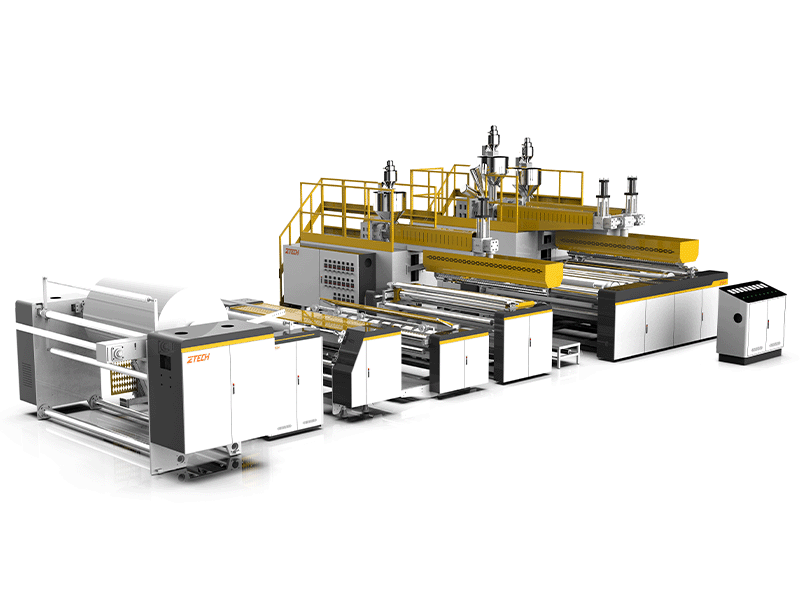
3 layer air bubble film machine
Conclusion
Choosing the most suitable equipment is the cornerstone of success in packaging production. Two-layer air bubble film machines, with their high cost-effectiveness and ease of operation, have become the primary choice for many entry-level businesses; while three-layer air bubble film machines, with their superior protective performance and powerful functional expandability, represent the future direction of the industry.
As a leader in the bubble film machinery manufacturing industry, Ztech is committed to providing global customers with the highest standard extrusion solutions. Whether you are seeking a highly efficient and stable two-layer air bubble film machine or pursuing a multi-functional, high-output three-layer air bubble film machine, Ztech can provide you with customized configurations and professional technical support.