
If you are planning to buy a bubble wrap machine, the most important question is not simply whether three layers or five layers are “better.” The right choice depends on your film structure, target customers, production volume and budget.
A 3-layer bubble film machine is normally the more practical option for standard cushioning film, furniture protection, e-commerce packaging and general industrial use. A 5-layer bubble film machine becomes more valuable when you need online lamination, higher rigidity, moisture resistance, thermal insulation or a wider product range.
The key is to compare the complete production solution—not just the number of layers shown in a quotation.
What Do 3 Layers and 5 Layers Actually Mean?
A typical 3-layer bubble film has a sandwich structure:
PE flat layer + bubble layer + PE flat layer
The two flat PE layers protect the air bubbles from direct abrasion and improve surface smoothness. They can also support printing, color control or anti-static formulations. Depending on the design, a 3-layer line may use two or three extruders, so “three layers” does not automatically mean “three extruders.”
A 5-layer machine can describe two different production methods.
The first is a true five-layer co-extrusion structure, in which different PE or functional materials are distributed through several extrusion channels. The second is a three-layer bubble film line with additional online lamination. In this case, aluminum foil, kraft paper, EPE foam or another PE-coated material is added to create a five-layer finished product.
This distinction matters. A five-layer machine may be designed mainly for stronger plastic film, or it may be designed for composite insulation and specialty packaging. Ask the supplier for a cross-section drawing, extrusion diagram and layer-by-layer material specification before comparing prices.
3-Layer vs. 5-Layer Bubble Film Machine
| Factor | 3-Layer Machine | 5-Layer Machine |
|---|---|---|
| Initial investment | Lower | Higher |
| Typical product | Standard bubble film | Laminated or functional bubble film |
| Material control | Good | More flexible |
| Puncture resistance | Suitable for general packaging | Usually higher when properly formulated |
| Online lamination | Optional | Often a core function |
| Operation | Easier to learn | Requires more process control |
| Changeover | Generally faster | More variables during changeover |
| Maintenance | Lower cost | Higher cost and more components |
| Best fit | E-commerce, furniture, logistics | Insulation, moisture protection, heavy-duty packaging |
Does a 5-Layer Machine Produce More?
Not necessarily.
Published equipment specifications show that 3-layer lines can range from approximately 65 to 280 kg/h depending on working width, screw diameter and model configuration. Some 5-layer laminated lines are specified at roughly 150–400 kg/h. These figures are useful for screening machines, but they are not directly comparable unless the film width, GSM, bubble size, raw material and operating conditions are identical.
When requesting a quotation, ask for:
- Saleable output in kg/h, not only maximum line speed
- Effective film width after edge trimming
- Output at your actual GSM or thickness
- Average waste percentage
- Energy consumption in kWh/kg
- Roll-change and startup time
- Number of operators required per shift
A line advertised at 3,000 meters per hour may produce less saleable material if it is running a heavier film, narrower effective width or unstable bubble formation.
When Is a 3-Layer Bubble Film Machine the Better Choice?
Choose a 3-layer bubble wrap making machine when your business has a stable, mainstream product mix.
It is usually suitable for:
- Furniture and household appliance protection
- E-commerce and courier packaging
- Ceramic, glass and hardware packaging
- Bubble bags and protective sheets
- Standard logistics and warehouse applications
The main advantage is lower entry risk. The equipment is generally easier to install, operate and maintain. It can also provide independent control of layer materials, thickness and color, allowing recycled material to be used in selected layers when film quality permits.
A 3-layer line is often the sensible starting point for a new factory that has not yet secured specialty-film orders. You can invest the saved capital in a better cooling system, automatic winding, edge-trim recycling or quality inspection—components that directly affect daily production.
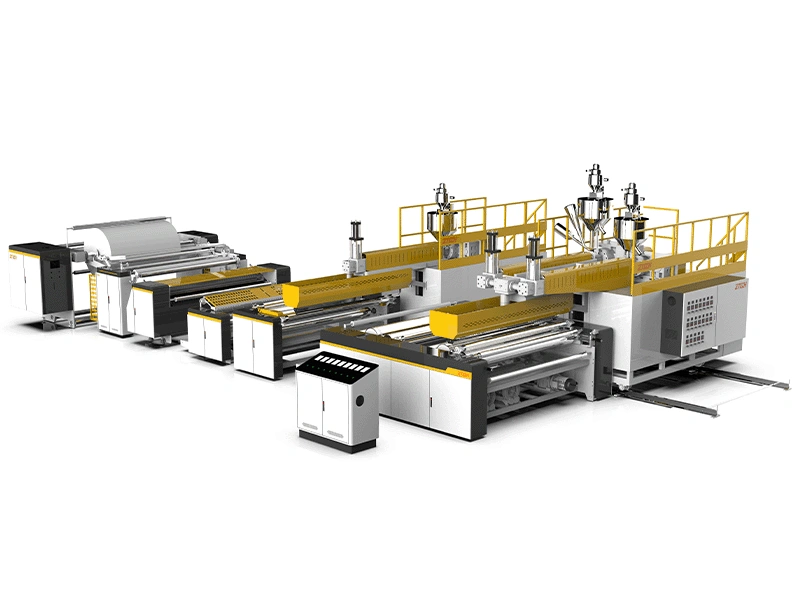
5-Layer Air Bubble Film Lamination Machine
When Does a 5-Layer Bubble Film Machine Make Sense?
A 5-layer machine is justified when the extra functions create measurable commercial value.
Typical applications include:
- Aluminum-foil bubble insulation
- Kraft-paper laminated packaging
- Moisture-resistant building materials
- EPE-composite protective packaging
- Heavy-duty electronics and automotive parts
- Premium packaging requiring better stiffness or barrier performance
Online lamination can remove a separate processing stage. A published five-layer lamination configuration, for example, supports aluminum foil, kraft paper, EPE and PE-coated materials while independently controlling layer thickness, tension and bonding pressure.
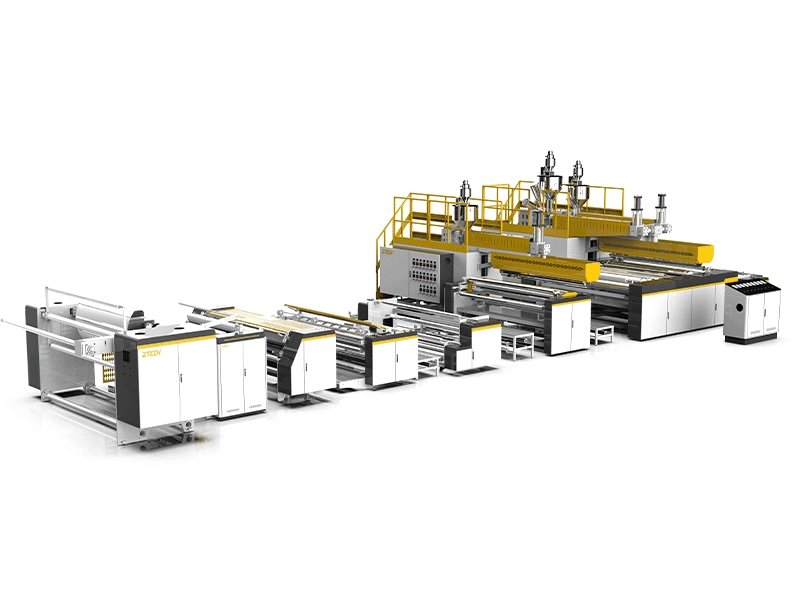
5-Layer Air Bubble Film Lamination Machine
However, the higher machine price is worthwhile only if you can sell the added functionality. If your customers buy ordinary clear bubble film by the kilogram, the additional extruders, laminating rollers, controls and maintenance may lengthen the payback period.
Use this simple calculation:
Payback period = Additional machine investment ÷ Monthly incremental gross profit
Include material savings, labor, waste, electricity, maintenance and offline lamination costs in the calculation.
A Practical Decision Example
Imagine two factories.
Factory A supplies furniture retailers and online sellers. Its customers mainly need transparent cushioning film in standard widths. Demand is steady, but there are no confirmed insulation orders. A 3-layer machine is likely to deliver the faster and safer return.
Factory B supplies construction-material distributors. Its customers require foil-backed bubble insulation and moisture-resistant composite rolls. A 5-layer laminating line may reduce handling, shorten production flow and create a higher-value product category.
Neither factory should choose based on layer count alone. The correct decision comes from the product specification and sales opportunity.
Common Buying Mistakes
- Comparing “maximum speed” instead of guaranteed output
- Assuming five layers always means five extruders
- Buying a low-price 3-layer machine without checking cooling and winding quality
- Ignoring local voltage, water cooling and compressed-air requirements
- Accepting performance claims without a factory acceptance test
- Using recycled material without testing contamination and melt stability
- Purchasing a 5-layer line before confirming demand for laminated products
For packaging validation, use repeatable drop, vibration and compression procedures. ASTM packaging standards include methods for drop testing, vibration testing and overall shipping-system performance, which are more meaningful than visual inspection alone.
Final Recommendation
Choose a 3-layer bubble film machine if your priority is lower investment, simpler operation and efficient production of standard cushioning film.
Choose a 5-layer bubble film machine if you need online lamination, insulation, moisture resistance, higher rigidity or a broader specialty-product portfolio.
The U.S. Census Bureau reported that e-commerce represented 17.1% of total retail sales in the second quarter of 2026, confirming continued demand for protective packaging. The opportunity is real, but profitability still depends on selecting a line that matches your actual product mix.
Before requesting a quote, send the supplier your target film structure, working width, GSM or thickness, bubble diameter, raw materials, required kg/h and any lamination materials. A reliable manufacturer should be able to compare both configurations using your production data—not a generic catalog price.
Frequently Asked Questions
Is a 5-layer bubble film machine always better than a 3-layer machine?
No. A 5-layer machine offers more material and lamination options, but a 3-layer machine is often the better choice for standard cushioning film, furniture packaging, e-commerce and general logistics applications. The right machine depends on your product requirements and expected return on investment.
Does a 5-layer machine always have five extruders?
No. Some 5-layer bubble film machines use additional extrusion units, while others produce a 3-layer bubble structure and add aluminum foil, kraft paper, EPE or PE film through online lamination. Ask for the complete process diagram before making a purchase.
Which machine has a lower operating cost?
A 3-layer machine usually has lower purchase, maintenance and training costs. A 5-layer machine may reduce offline lamination, labor and material waste, but only if you have enough demand for laminated or specialty bubble film. Compare total cost per saleable kilogram rather than machine price alone.
Can a 3-layer bubble film machine use recycled LDPE?
Many 3-layer machines can process recycled LDPE in selected layers. The usable ratio depends on contamination, melt consistency, filtration and the required appearance and strength of the finished film. Test your recycled material before finalizing the extrusion system.
What production capacity should I expect?
Capacity varies with working width, film GSM, bubble size, screw diameter, raw material and cooling efficiency. Published specifications for 3-layer lines commonly range from about 65 to 280 kg/h, while some 5-layer lines are rated at approximately 150 to 400 kg/h. These figures should be verified with your own material during a factory acceptance test.
What information should I provide when requesting a quotation?
Provide the required film structure, working width, GSM or thickness, bubble diameter, raw materials, target output in kg/h, operating voltage and any lamination materials. This allows the manufacturer to recommend a suitable bubble wrap machine instead of sending a generic configuration.