
Bubble packaging is often associated with shipping boxes and fragile household items. In practice, air bubble packaging is used across a much wider range of applications, including electronics, glass, automotive parts, medical devices, agriculture, temperature-sensitive shipments and industrial equipment.
The important question is not simply whether bubble wrap can protect a product. The better question is which type of bubble packaging fits the product, shipping environment and packing process.
A small-bubble film may be ideal for surface protection, while a large-bubble or heavy-duty structure may be more suitable for bulky products. Electronics may require anti-static protection. Cold-chain shipments may need foil-faced insulation combined with refrigerants. Glass products usually need bubble wrap, edge protection, a rigid carton and internal void control as one complete packaging system.
This guide explains the main bubble packaging applications, how to choose the right bubble film or roll, and when specialized materials or packaging equipment are needed.
What Is Bubble Packaging Used For?
Bubble packaging uses air-filled cells between layers of flexible film to cushion products against shock, vibration and abrasion. It can also provide surface protection, interleaving, temporary insulation and separation between products during shipping or storage.
Common applications include:
- Wrapping glass, ceramics and fragile products
- Protecting electronics and precision components
- Preventing scratches on metal, plastic and painted surfaces
- Cushioning automotive and industrial parts
- Lining cartons and separating products
- Creating insulated liners for short-duration temperature control
- Protecting plants and greenhouse glazing
- Supporting faster packing with perforated bubble packaging rolls
The right material depends on product weight, fragility, surface sensitivity, static risk, temperature requirements, transport distance and packing volume.
How Air Bubble Packaging Protects Products
Most air bubble packaging is made from polyethylene-based film. During production, one layer is formed into air cells and bonded to another film layer. These air pockets create a flexible cushion between the product and the outside environment.
Impact and vibration protection
When a package is dropped or handled roughly, the air cells compress and absorb part of the impact energy. This reduces the amount of force transferred directly to the product.
Bubble film is especially useful when the main risks are:
- Short drops
- Repeated handling
- Vibration during road or air transport
- Contact between products
- Scratching and surface abrasion
- Minor pressure from adjacent packages
However, bubble wrap is not a replacement for a strong outer carton. The carton carries much of the compression and stacking load, while the bubble material cushions the product inside the package.
Surface protection
Small-bubble film is often selected for products that are more sensitive to scratches than to severe impact. Common examples include:
- Polished metal
- Painted panels
- Glass surfaces
- Furniture
- Appliances
- Decorative products
- Automotive trim
For highly polished or coated surfaces, place a soft paper, foam or non-abrasive layer between the product and the bubble film. This reduces the risk of marks caused by pressure, dirt or movement.
Interleaving and separation
Bubble packaging can also be used between individual products. This is useful when multiple items are packed together and may rub against one another.
For example, a manufacturer may place bubble film between:
- Metal sheets
- Glass panels
- Automotive components
- Ceramic items
- Precision-machined parts
- Finished furniture components
Important limitations
Standard bubble film should not be expected to:
- Carry the full weight of a heavy product
- Prevent all damage to sharp corners
- Replace edge protectors
- Replace a rigid box
- Act as a complete moisture barrier
- Replace anti-static or static-shielding packaging
- Provide active cooling
- Perform outdoors for long periods without UV stabilization
Understanding these limits is one of the easiest ways to avoid packaging failures.
Types of Bubble Packaging
Bubble packaging is not one single product. It is available in different bubble sizes, film strengths, formats and functional constructions.
Standard bubble film
Standard bubble film is used for general wrapping, light cushioning, surface protection and carton lining. It is available in small, medium and large bubble formats.
Small bubbles are commonly used for:
- Small products
- Surface protection
- Cosmetics
- Books and retail items
- Small electronic housings
- Light ceramics
Medium and large bubbles provide greater cushioning depth and are often used for:
- Larger products
- Fragile household items
- Furniture parts
- Glassware
- Appliances
- Industrial components
Bubble size alone does not determine performance. Film thickness, air retention, product weight and packaging design are equally important.
Heavy-duty and industrial bubble wrap
Industrial bubble wrap is designed for products that face heavier impact, longer distribution cycles or more demanding handling conditions.
Typical applications include:
- Machinery parts
- Tools and dies
- Large electronic equipment
- Automotive components
- Industrial spare parts
- Heavy glass panels
- High-value products
Heavy-duty materials may use thicker film, larger bubbles, additional layers or enhanced air-retention structures. They may also be laminated with foam, paper or another film to improve tear resistance and surface protection.
Anti-static bubble film
Anti-static bubble film is used for electronics and other products that may be damaged by electrostatic discharge.
Suitable applications include:
- Printed circuit boards
- Computer components
- Sensors
- Measurement instruments
- Semiconductor-related parts
- Medical electronics
- Industrial control equipment
Anti-static bubble film should not automatically be treated as a complete ESD solution. The product may also require an ESD bag, a controlled workstation, proper grounding and other protective materials. ANSI/ESD S541 defines packaging properties for protecting electrostatic-discharge-sensitive items during production, storage and transportation. ESD packaging standard.
Foil-faced bubble insulation
Foil-faced bubble insulation combines air cells with a reflective metalized or aluminum layer. The reflective surface helps reduce radiant heat transfer, while the air layer slows conductive heat transfer.
It can be used for:
- Short-duration temperature-sensitive shipping
- Carton liners
- Food and meal-kit packaging
- Pharmaceutical transport packaging
- Greenhouse applications
- Roof and wall insulation
- HVAC-related applications
Foil bubble insulation slows temperature change. It does not actively cool a product and cannot replace refrigerants in a validated cold-chain shipment.
Kraft, corrugated and foam-laminated bubble wrap
The term “corrugated bubble wrap” is sometimes used loosely. It may refer to bubble film laminated to kraft paper, linerboard, corrugated paper or another structural layer.
Before purchasing, confirm:
- Number of layers
- Paper or board grade
- Bubble height
- Film thickness
- Lamination method
- Tear and puncture resistance
- Whether the layers can be separated for recycling
Paper-backed bubble wrap can improve handling strength and printability. Foam-laminated bubble film can provide a softer contact surface for products that may be marked by direct contact with bubble cells.
PE/PP Extrusion and Lamination Machinery
Recycled bubble wrap
Recycled bubble wrap may contain pre-consumer production scrap, post-consumer recycled material or a combination of both.
When comparing recycled products, ask for:
- Recycled content percentage
- Source of recycled material
- Available certifications
- Film performance compared with standard grades
- Whether the finished structure is recyclable
- Local recycling instructions
“Made with recycled content” and “recyclable after use” are different claims.
Perforated, adhesive and cohesive rolls
Perforated bubble packaging rolls are pre-scored at regular intervals, allowing operators to tear off repeatable lengths. Adhesive bubble film can help secure irregular products, while cohesive film sticks to itself rather than directly to the product.
Bubble Packaging Applications by Industry
Bubble packaging for e-commerce and shipping
E-commerce sellers use bubble packaging rolls because they are flexible, lightweight and easy to cut around products of different shapes.
Common applications include:
- Home décor
- Consumer electronics
- Bottles and cosmetics
- Toys
- Small appliances
- Ceramics
- Retail displays
Perforated bubble packaging rolls are particularly useful in packing stations. Operators can tear off repeatable lengths without measuring every package. For larger operations, a roll stand, cutter or dispenser can improve packing speed and reduce material waste.
Bubble film works best when the carton is close to the product size. If the box contains too much empty space, add suitable void-fill material to prevent movement.
Bubble wrap for glass, mirrors and ceramics
Glass is one of the most common applications for protective bubble packaging, but wrapping the product alone is not enough.
A better glass packaging system typically includes:
- A soft, non-abrasive layer against the glass surface.
- Bubble film for cushioning.
- Extra protection around corners and edges.
- A rigid carton or custom insert.
- Void-fill material to stop movement.
- Clear labeling and orientation control.
For flat glass or mirrors, edge protection is often more important than simply adding more layers of bubble film. For bottles and glass containers, separators or molded inserts can prevent products from hitting one another.
Do not pull the film so tightly that the product is placed under unnecessary pressure. The goal is to create a protective cushion, not to compress the glass.
The final package should be tested as a complete product-and-package system. A material sample that looks strong in isolation may still fail when the carton, product orientation and internal spaces are changed.
Bubble wrap for shipping electronics
Electronics require two types of protection: mechanical protection and electrostatic protection.
A practical packaging sequence is:
- Protect the bare electronic component with an appropriate ESD bag or container.
- Add anti-static bubble film around the protected component.
- Protect screens, connectors and exposed surfaces with a soft separator.
- Protect corners where needed.
- Place the product in a rigid carton with controlled internal movement.
- Validate the package through drop, vibration and environmental testing.
Regular bubble wrap may cushion an electronic product, but it may not control static charge. Anti-static bubble film should be selected based on the product’s ESD requirements and the company’s broader ESD control program.
Avoid placing ordinary bubble film directly against exposed circuit boards.
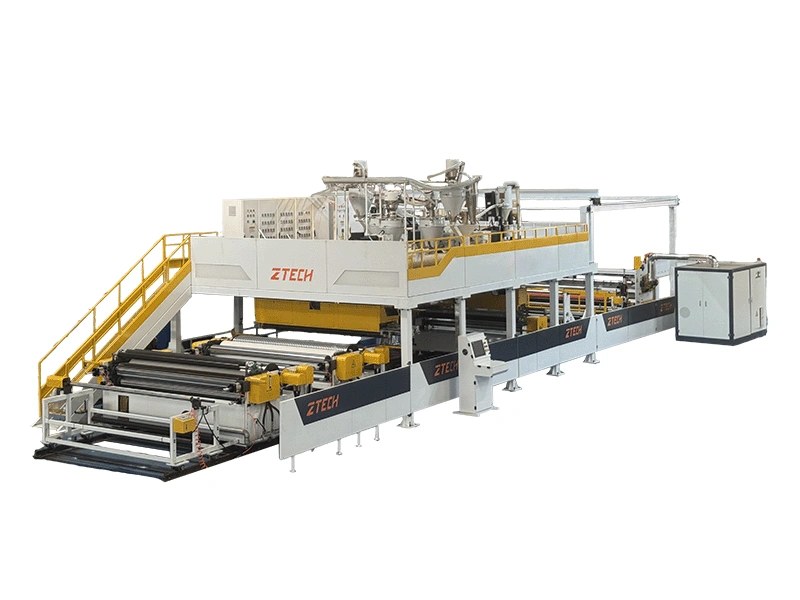
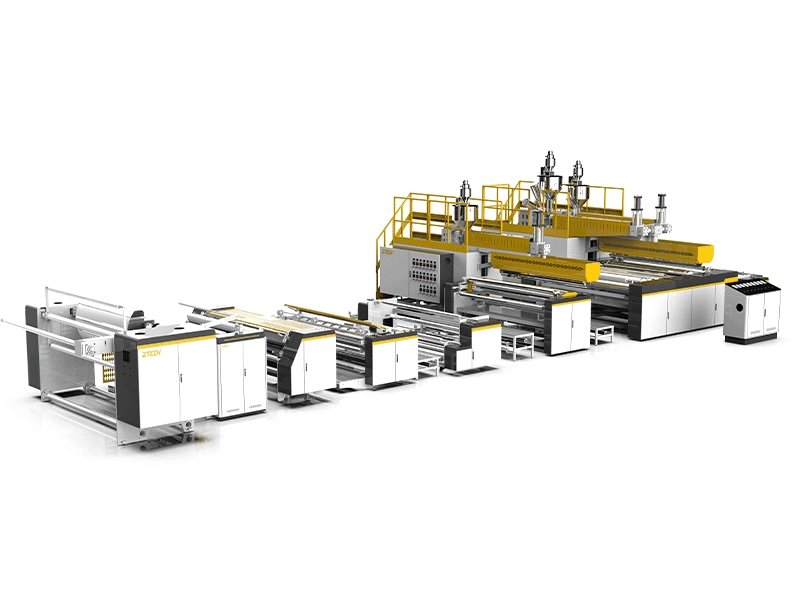
Nylon Coextrusion Air Bubble Film Machinery
Insulation and temperature-sensitive packaging
Bubble insulation can be useful when a shipment needs to slow heat transfer for a limited period.
Applications include:
- Food delivery
- Flowers and plants
- Cosmetics
- Short-distance pharmaceutical transport
- Meal kits
- Laboratory materials
- Seasonal temperature protection
A complete temperature-sensitive packout may include:
- A reflective bubble liner
- An outer corrugated carton
- Refrigerants or gel packs
- A product-specific loading pattern
- Temperature indicators or data loggers
- Documented closure and seam design
Coverage is important. Gaps around the lid, corners and seams can reduce the effectiveness of the liner. The insulation should be tested under the expected outside temperature, duration and transport conditions.
Automotive applications
Automotive manufacturers and suppliers use industrial bubble wrap to prevent surface damage during transport and storage.
Typical products include:
- Headlights
- Interior trim
- Painted panels
- Chrome-plated components
- Wheels and accessories
- Engine and transmission parts
- Replacement components
The material should be selected according to the primary risk. A painted panel may need soft surface separation. A heavy metal component may need puncture resistance and deeper cushioning. Parts with sharp edges may require foam, paperboard or molded protection before being wrapped.
For reusable supply chains, consider whether the material can be folded, stored and reused without losing protection.
Medical and pharmaceutical packaging
Bubble film can protect medical devices, laboratory instruments and pharmaceutical shipping cartons from shock and surface damage. However, it should not be confused with sterile barrier packaging.
For terminally sterilized medical devices, the packaging system must maintain sterility until the point of use. ISO 11607-1 addresses requirements for materials, sterile barrier systems and packaging systems used with terminally sterilized medical devices. ISO 11607-1.
Bubble packaging is generally more appropriate as:
- Secondary cushioning
- Outer carton protection
- Transport protection
- Equipment protection
- Separation between packaged medical products
Any packaging used directly with a sterile product must be reviewed and validated according to the applicable regulatory and quality requirements.
Agriculture and greenhouse applications
Agriculture uses bubble materials in both packaging and insulation.
Applications include:
- Seedling transport
- Short-term frost protection
- Produce packaging
- Greenhouse glazing insulation
- Protection of irrigation components
- Agricultural equipment storage
For greenhouse use, select horticultural or UV-stabilized bubble material rather than ordinary shipping bubble wrap. Standard packaging film can become brittle after long exposure to sunlight.
Bubble insulation can reduce heat loss while still allowing some light to enter. However, growers should also evaluate:
- Light transmission
- Condensation
- Ventilation
- Attachment methods
- UV resistance
- Seasonal removal and storage
Agricultural guidance from USDA NRCS includes reflective double-bubble insulation as a greenhouse energy-efficiency practice. USDA greenhouse insulation reference.
Industrial equipment and precision parts
Industrial bubble wrap is useful for protecting products that are too irregular for standard bags or mailers.
Examples include:
- CNC-machined parts
- Tools and molds
- Pumps and valves
- Electrical cabinets
- Industrial sensors
- Fabricated metal components
- Laboratory equipment
Industrial packaging should address more than impact. Engineers should also consider:
- Corrosion
- Sharp edges
- Oil or chemical residue
- Long storage periods
- Pallet stacking
- Repeated handling
- Export and ocean transport
For metal parts, bubble film may be combined with VCI material, kraft paper, foam or a custom insert.
How to Choose the Right Bubble Packaging Rolls
Before selecting a roll, answer six questions.
What is the product weight?
Heavy products can flatten small bubbles during impact. A thicker or larger-bubble structure may be needed, along with a rigid carton and base support.
Is the surface scratch-sensitive?
If yes, add an interleaf layer or select a foam-laminated structure. The bubble film should not be the only material touching a highly polished surface.
Does the product require ESD protection?
If yes, specify anti-static or ESD-compatible packaging and confirm the requirements with the quality team.
Is temperature control required?
If yes, determine whether the requirement is simple thermal buffering or a validated cold-chain shipment. Use reflective insulation only as one part of the overall system.
How long will the product remain in transit or storage?
A short local shipment may need a light-duty material. Long-distance distribution, warehouse storage and repeated handling may require stronger air retention and puncture resistance.
What is the packing volume?
Low-volume operations may use a boxed perforated roll. Medium-volume operations may benefit from a standing dispenser and cutter. High-volume facilities may need on-demand inflation, automatic cutting, bag making or right-sized packaging equipment.
When requesting a quote, provide:
- Product dimensions
- Product weight
- Monthly quantity
- Shipping method
- Required roll width and length
- Bubble size
- Film thickness
- Perforation length
- Recycled content requirements
- ESD, VCI or insulation requirements
Bubble Packaging Equipment and Workflow
The material and equipment should be selected together.
Manual packing
Suitable for low-volume operations:
- Boxed perforated rolls
- Wall-mounted dispensers
- Floor stands
- Manual cutters
- Packing tables
Semi-automated packing
Useful for growing warehouses:
- Roll stands with winders
- Automatic length cutting
- Rewinding equipment
- Slitting systems
- Integrated carton sealing
- Standardized workstations
Automated fulfillment
High-volume facilities may use:
- On-demand inflation systems
- Automatic bubble bag machines
- Product-size sensors
- Automatic labeling
- Conveyor integration
- Inline material insertion
Film converting and manufacturing
A bubble film manufacturer may connect the material with:
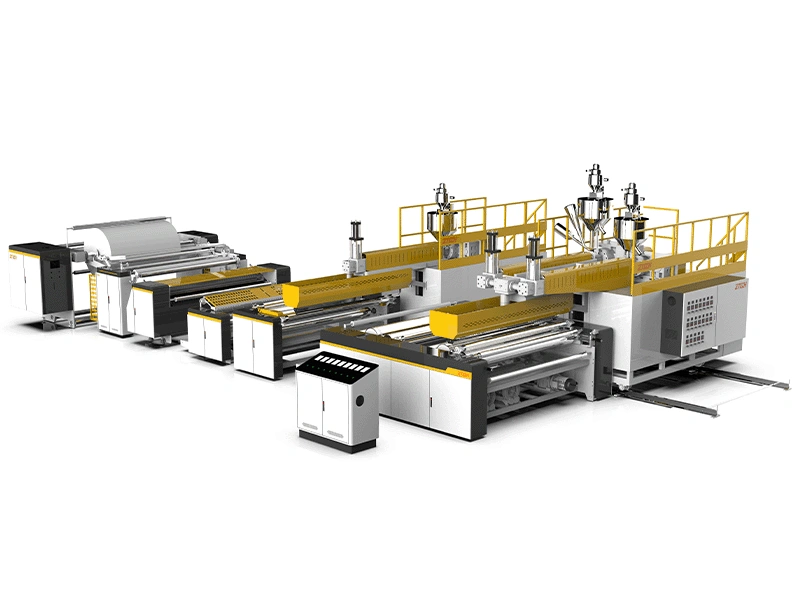
- Air bubble film extrusion lines
- Lamination machines
- Slitting and rewinding machines
- Automatic perforators
- Bubble bag making machines
- Edge-waste recycling systems
Automation can improve consistency, but it cannot correct an unsuitable film grade or poor package design.
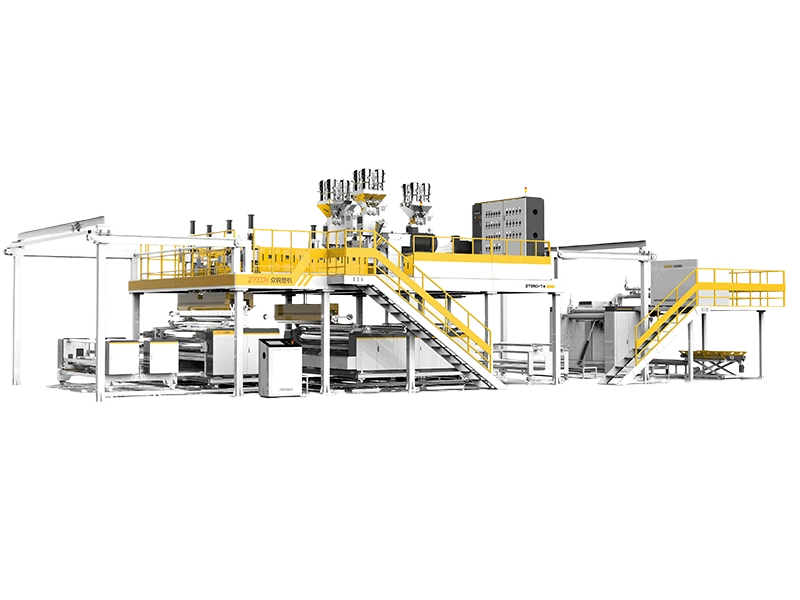
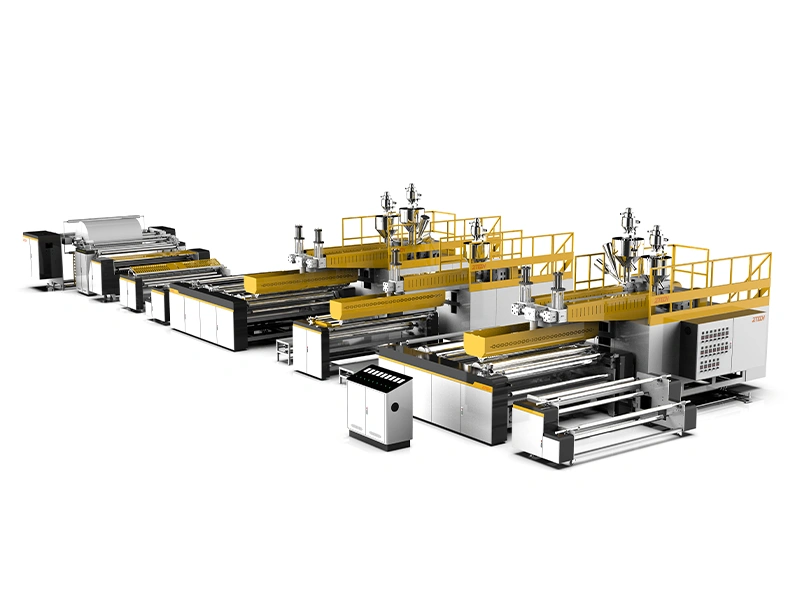
ABA Coextrusion Air Bubble Film Machinery
Recycled Bubble Wrap and Recycling Considerations
The United States generated more than 35 million tons of plastic in 2018, while only 8.7% was recycled, according to the U.S. Environmental Protection Agency. The figure is dated, but it shows why material selection and end-of-life planning matter. EPA plastics data.
Flexible plastic films, including bubble wrap, are often handled through store drop-off or specialist film-recycling programs rather than ordinary household recycling bins. Local rules vary, so the package should include clear disposal guidance.
To improve the sustainability of bubble packaging:
- Use the lightest film that passes the required test.
- Reuse clean bubble material where practical.
- Use perforated or right-sized rolls to reduce offcuts.
- Separate tape, labels and contaminated materials.
- Ask for documented recycled content.
- Avoid unsupported “eco-friendly” claims.
- Confirm the recyclability of laminated structures.
A thinner package that fails and causes a product replacement may create more waste than a stronger package that arrives intact. Sustainability should therefore be measured across material use, damage prevention, shipping weight and end-of-life handling.
Testing Bubble Packaging Performance
The most useful test is not a test of the bubble film alone. It is a test of the product, inner protection, carton, closure and distribution environment together.
ISTA 3A covers individual packaged products weighing up to 70 kg or 150 lb for parcel delivery. The procedure includes shock and vibration testing. For fragile or liquid products, ISTA recommends testing two or more packaged-product samples, and encourages repeated testing with new samples when greater statistical significance is needed. ISTA 3A overview.
Relevant testing areas include:
- Drop testing
- Random vibration
- Compression
- Puncture resistance
- Film tensile strength
- Air retention
- Temperature and humidity conditioning
- Surface abrasion
- Package deformation
ASTM packaging references include D4169 for shipping container performance, D882 for tensile properties of thin plastic sheeting, D5276 for drop testing and D999 for vibration testing. ASTM packaging standards.
Keep a record of:
- Film type and lot
- Bubble height
- Number of layers
- Product orientation
- Carton size
- Internal void-fill arrangement
- Test conditions
- Damage criteria
- Final inspection results
Common Bubble Packaging Mistakes
Choosing the largest bubble automatically
Large bubbles are not always the best choice. A small-bubble film may provide better surface protection, while a heavy product may require more structural support rather than simply more bubble material.
Using bubble wrap as the only void fill
Bubble film is mainly a wrapping and cushioning material. Air pillows, paper cushioning or molded inserts may work better for large empty spaces.
Wrapping glass without protecting the edges
Glass often fails at corners and edges. Add edge protection and use a rigid outer package.
Using standard bubble film for electronics
Standard bubble film may not meet ESD requirements. Use the appropriate anti-static or shielding system.
Treating insulation as active cooling
Foil-faced bubble insulation slows heat transfer. It does not lower the product temperature by itself.
Using ordinary bubble wrap outdoors
Long-term sunlight can degrade standard film. Use UV-stabilized material for greenhouse and outdoor applications.
Making unsupported recycling claims
Do not assume that a product containing recycled content is accepted in every local recycling program.
Conclusion
Bubble packaging is most effective when it is selected as part of a complete packaging system. The correct solution depends on product weight, fragility, surface sensitivity, static risk, temperature, shipping conditions and packing volume.
Standard bubble film may be enough for general products, while glass, electronics, medical devices, industrial equipment and cold-chain shipments often require additional layers, specialized materials or testing.
For a product-specific recommendation, provide the product dimensions, weight, shipping conditions, monthly volume and required protection level. A qualified supplier such as ZTECH can then recommend the appropriate bubble packaging roll, laminated structure or packaging equipment solution.
Frequently Asked Questions
What is bubble packaging used for?
Bubble packaging is used for impact cushioning, vibration reduction, surface protection, product separation, carton lining and temporary insulation. Specialized versions are available for electronics, cold-chain packaging, industrial parts and greenhouse applications.
What bubble wrap is best for glass?
Medium or large bubble film can be a useful starting point for glass, but it should be combined with a soft interleaf, edge protection, a rigid carton and internal void control. The final design should be validated through drop and vibration testing.
Can I use bubble wrap to ship electronics?
Yes, but static-sensitive electronics should first be placed in suitable ESD packaging. Anti-static bubble film can then provide external cushioning. Ordinary bubble wrap should not be placed directly against exposed circuit boards.
Is bubble wrap good for insulation?
Bubble film provides limited thermal resistance. Foil-faced bubble insulation is more effective for reflecting radiant heat and slowing heat transfer. It does not replace refrigerants, insulated cartons or temperature validation for cold-chain shipments.
What is industrial bubble wrap?
Industrial bubble wrap is a stronger or more specialized bubble material designed for heavy, fragile, high-value or long-distance shipments. It may include thicker film, larger bubbles, enhanced air retention or laminated layers.
Is recycled bubble wrap recyclable?
It may be recyclable through a flexible-film recycling program, but local acceptance varies. Recycled content and recyclability are separate claims. Check the film structure, contamination level and local collection requirements.
What is corrugated bubble wrap?
Corrugated bubble wrap generally refers to bubble film combined with kraft paper, corrugated paper or another reinforcing layer. Because the term is used inconsistently, buyers should confirm the exact construction, thickness and recycling method.
Should I buy bubble packaging rolls or air pillows?
Bubble packaging rolls are better for wrapping products and protecting surfaces. Air pillows are mainly used to fill empty carton space. Fragile products may require bubble film, air pillows, foam or air columns in combination.